Hardwood floors are the most durable surface in your home and the most particular about how they're cleaned — both facts flow from the same source. Wood moves with moisture, and its finish (not the wood) is what you're actually cleaning. Hold those two ideas and every rule below derives itself, starting with the only one that's non-negotiable: water is the enemy. All hardwood cleaning is a controlled violation of this rule.
Daily-ish: grit patrol
What scratches hardwood isn't shoes — it's the grit under shoes, ground along the finish like sandpaper. The counters: a soft-bristle sweep or dust mop on the traffic paths, a vacuum without a beater bar (or with it switched off — a spinning brush roll flings grit and chips finish edges), and mats at every exterior door doing bouncer duty. Felt pads under every piece of furniture that ever moves — the five-dollar prevention for the most common hardwood scar in existence.
Weekly: the barely-damp mop
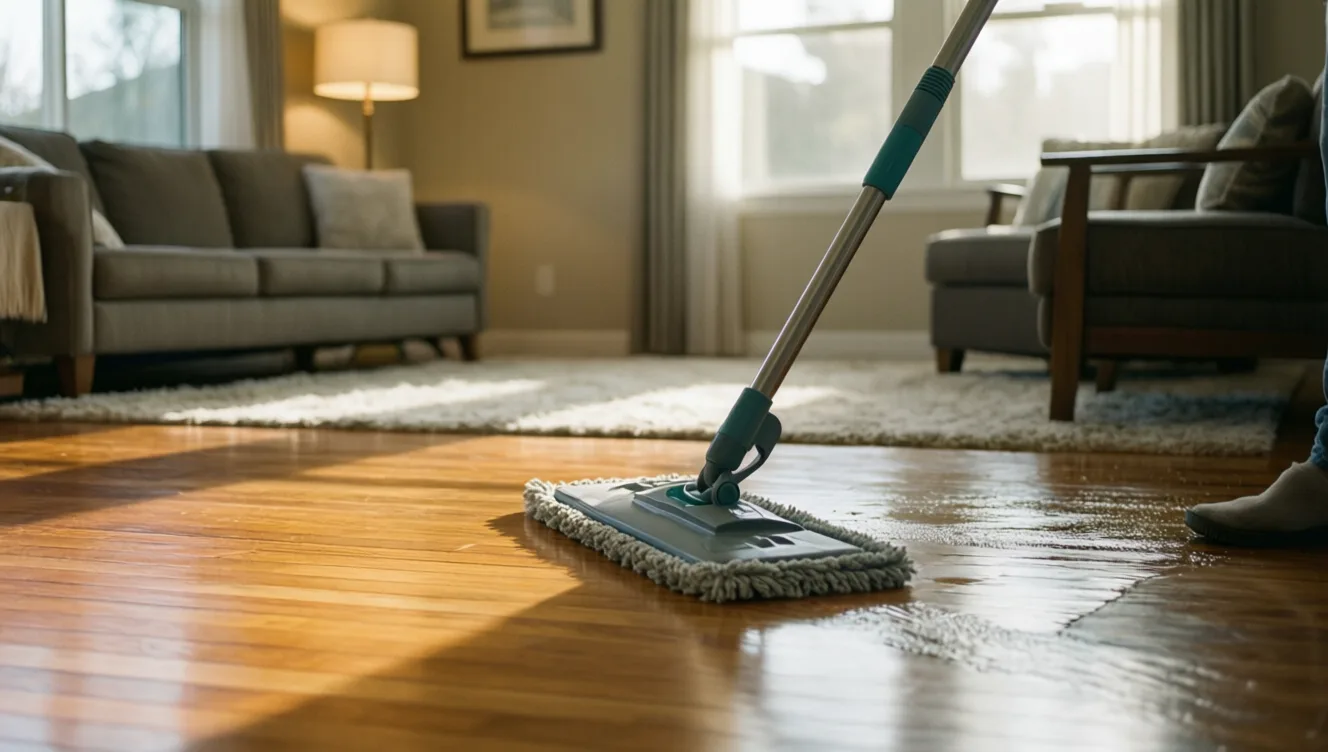
Here's the controlled violation: a microfiber mop, misted or wrung to barely-damp — never wet, never dripping — with a pH-neutral hardwood cleaner. Work with the grain, and the floor should air-dry within a minute behind you; if you can see standing moisture trails, the mop is too wet. Standing water finds board seams, and swollen edges and gray staining are one-way trips.
The never list, because each one has ruined real floors: vinegar (acid dulls finish — the internet's favorite hardwood tip is wrong), steam mops (heat plus moisture driven straight into seams — the fastest way to cup a floor short of a burst pipe), ammonia, wax-based polishes on polyurethane finishes (they build a smeary film that ruins future refinishing), and any "shine restorer" that doesn't name your finish type on its label.
Spills and the seasonal reality
Spills get wiped now — on hardwood, a spill's damage clock runs in minutes, not hours. Santa Clara County's wet winters raise the stakes: umbrellas, wet shoes, and dog paws at the door all winter mean the entry mats and prompt wiping do more for the floor November through March than any cleaning product all year. Sunlight is the slow-motion version of the same problem — UV fades finish unevenly, so rotating rugs and adjusting window coverage keeps the floor aging as one surface instead of a patchwork.
Deep cleaning vs. refinishing (the honest line)
Over years, a film builds that the weekly mop can't remove — embedded grime, product residue, traffic dullness. Professional hardwood deep cleaning removes that layer: purpose-made machines and chemistry that clean the finish thoroughly without soaking the wood, restoring the clarity and light the floor had underneath. It's the right call when floors look dull or dirty through the finish.
What deep cleaning cannot do — our honest-expectations rule, in hardwood terms — is fix the finish itself. Deep scratches, worn-through traffic lanes, gray water-stained boards, and cupping are refinishing territory: sanding and recoating, a different trade at a different price. A company that promises cleaning will "restore even the most worn floors to new" is selling you the wrong service. We'd rather tell you which one you need — and when it's ours, hardwood deep cleaning is on the menu across Santa Clara County and San Jose, priced plainly → All cleaning services · Deep cleaning service · Deep cleaning prices
The rest of the floor family plays by different rules — carpet's system is here → Carpet Cleaning in San Jose: The Complete Owner's Guide