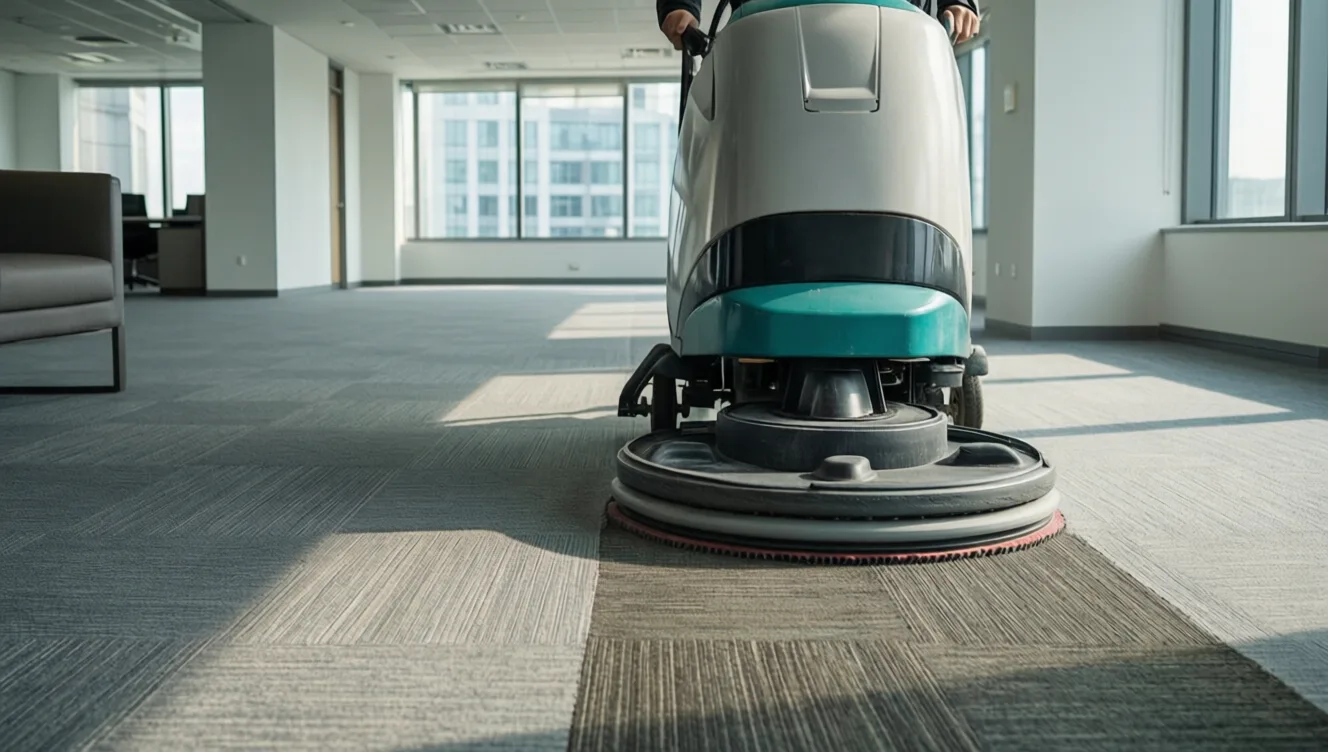
Ask three vendors how often office carpet needs professional cleaning and you'll get three sales pitches. Here's the answer the way we give it to facilities managers in San Jose: it depends on exactly one thing — foot traffic — and once you know your traffic tier, the schedule writes itself.
The two clocks every carpet runs on
Commercial carpet care is two different jobs on two different clocks:
Vacuuming removes the dry soil that grinds fibers down like sandpaper underfoot. It's the cheap clock, and it does most of the preservation work.
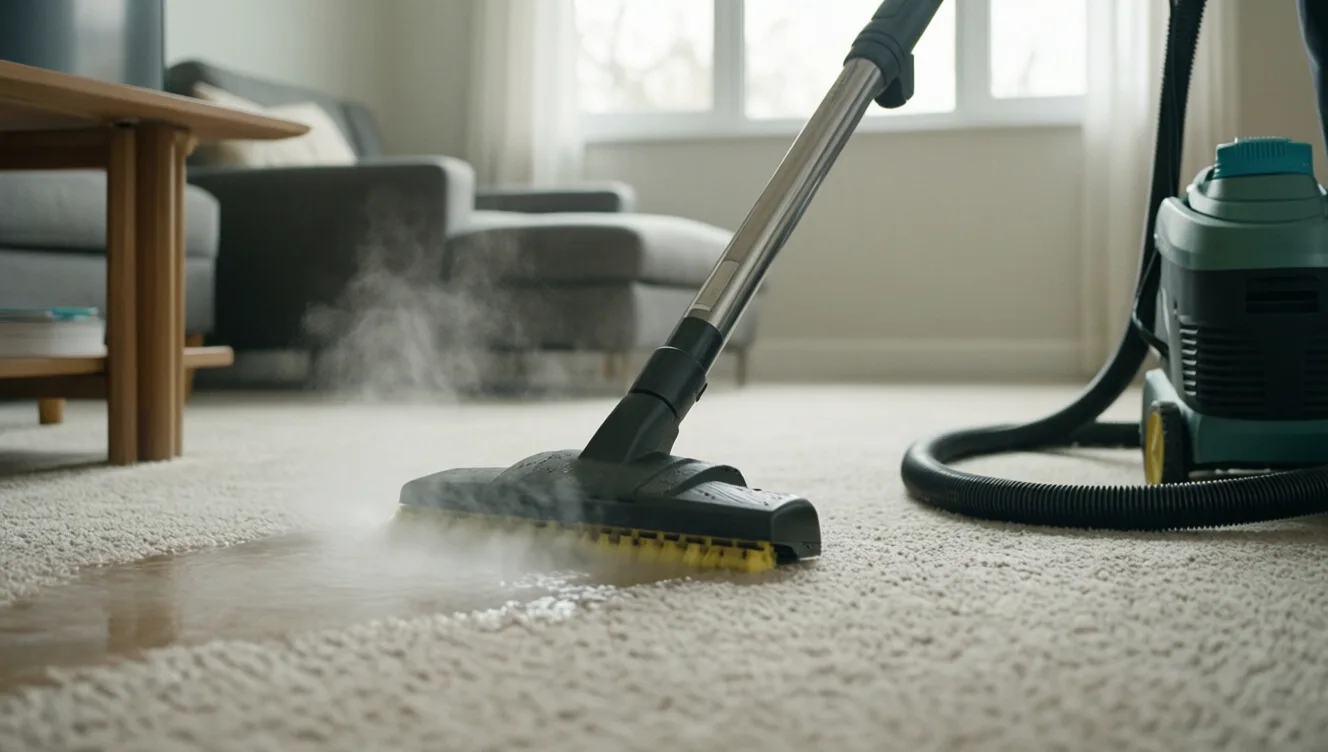
Hot-water extraction (professional deep cleaning) removes what vacuums can't: the oily film from foot traffic that bonds soil to fiber and turns walkways gray. No amount of extra vacuuming substitutes for it — oil doesn't vacuum.
The mistake that ages carpet fastest is running only the first clock until the lanes look dark, then calling for a rescue. By the time traffic lanes are visibly gray, soil has been cutting fibers for months — extraction will clean it, but the wear is banked.
The schedule, by traffic tier
Light traffic — private offices, low-headcount suites, conference rooms used weekly:
- Vacuum: 2× per week
- Professional extraction: every 6–12 months
Medium traffic — typical open offices, reception areas, corridors:
- Vacuum: daily on main paths, 2–3× weekly elsewhere
- Professional extraction: every 3–6 months
Heavy traffic — lobbies, entries, break rooms, retail floors, anything that meets the street:
- Vacuum: daily, no exceptions
- Professional extraction: every 1–3 months, with entry matting doing the bouncer's job at every door
Two adjustments: rainy-season months push entries one tier up (the South Bay's winter mud arrives on every shoe), and any space with food service runs on the heavy clock regardless of headcount.
Spills don't wait for the schedule
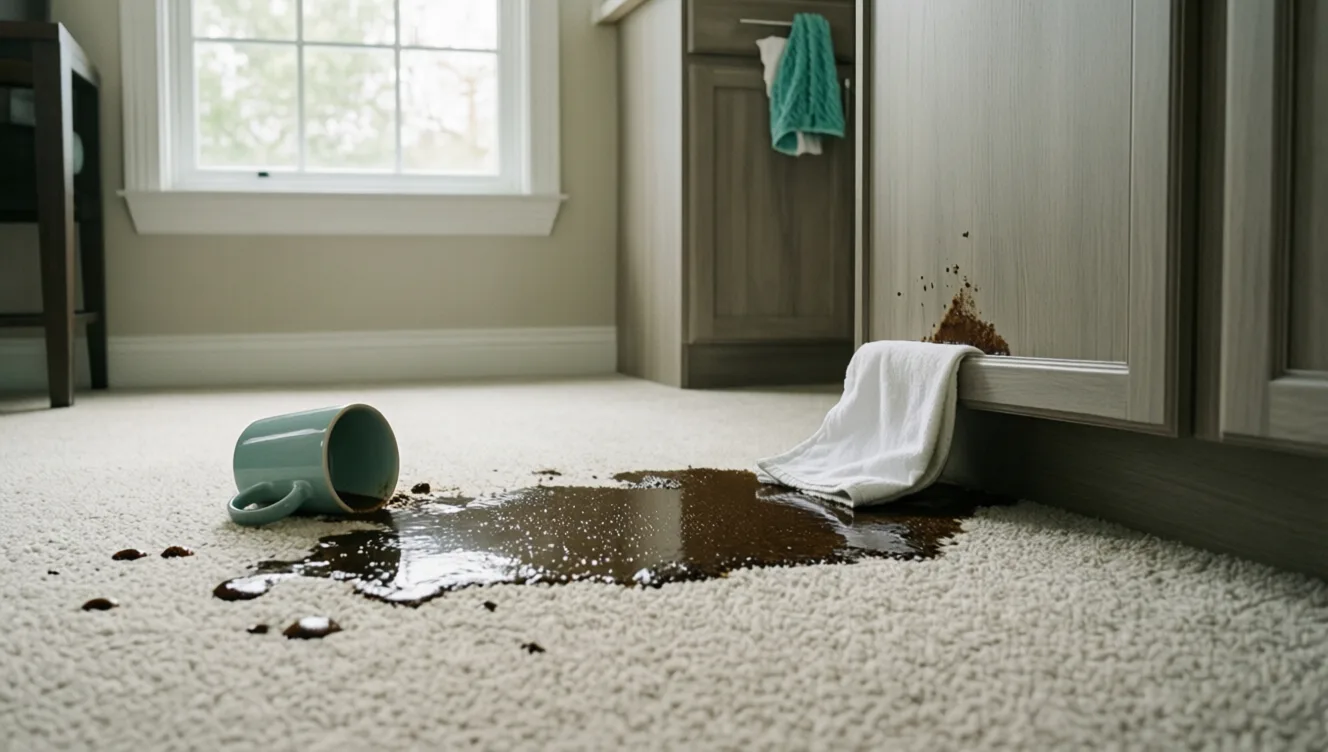
Scheduled cleaning handles accumulation; spills are their own emergency. Blot immediately, treat fast, and if it's coffee, wine, or anything dyed, get professional spot treatment before the stain sets its roots. A carpet program that includes on-call spot service keeps one bad Tuesday from becoming a permanent floor feature.
Why the schedule pays for itself
Commercial carpet is a five-figure asset that fails in a predictable way: ground-in soil abrades fibers, lanes mat down, and replacement arrives years early. A real cadence — the boring, calendar-driven kind — routinely doubles the usable life of the same carpet. Against replacement cost, quarterly extraction is the cheapest insurance in the building. It also reads instantly to everyone who walks in: clean floors are the first line of a workplace's body language.
Which method (and when it matters)
For routine office extraction, truck-grade hot-water extraction is the standard: deep clean, fast enough dry-down when done right. Low-moisture encapsulation has a place for interim maintenance on big floors between extractions. What matters more than the method's name: evening or weekend scheduling so carpets are clean AND dry before the first badge-in — which is exactly how we run commercial carpet service across San Jose and Santa Clara County → Commercial carpet cleaning
The one-line version: vacuum on a daily-to-weekly clock by traffic, extract on a monthly-to-yearly clock by traffic, never wait for gray lanes, and put a mat at every door.