Here's the fact that explains every mystery about pet odor: dried urine isn't gone — it's crystallized. Uric acid forms salt crystals that bond to carpet fiber, sit odorless when dry, and reactivate every time humidity touches them. That's why the smell "comes back" on warm afternoons, why the spot you scrubbed twice still announces itself to guests, and why your dog keeps returning to the same square foot. You didn't fail to clean it — you cleaned everything except the crystals.
Once you know that, the whole subject gets simple.
Fresh accident: the ten-minute protocol
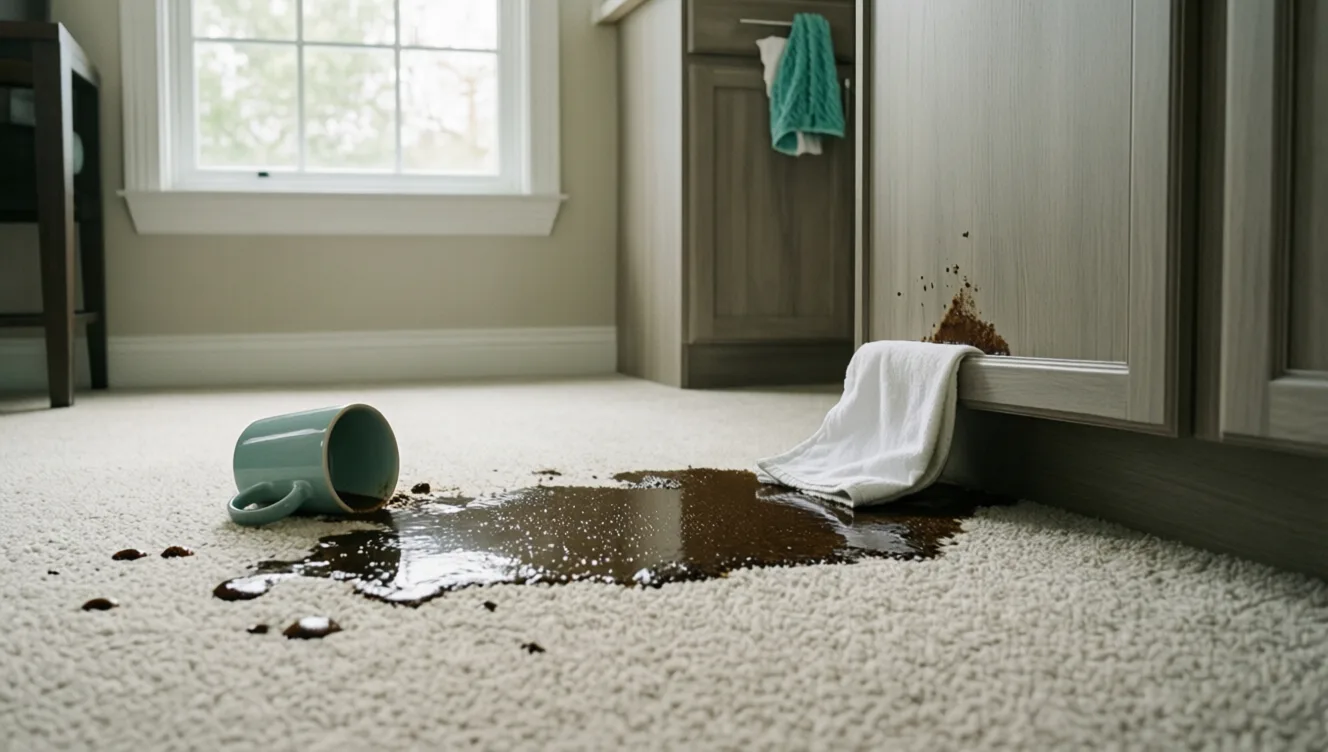
- Blot, don't rub. Stack paper towels or a cloth on the spot and stand on it. Repeat until barely damp. Rubbing drives urine deeper and frays fiber.
- Rinse lightly with cool water and blot again. You're diluting what's left before it dries into crystals.
- Saturate with an enzymatic cleaner — the word to look for on the bottle is "enzymatic" or "bio-enzymatic," and it must reach everywhere the urine reached, which is deeper than it looks. A light spritz treats the top of a stain that lives at the bottom.
- Let it work wet. Enzymes digest uric acid slowly — cover the spot with a damp cloth and give it the hours the label asks for. This is the step everyone skips, and it's the whole treatment.
- Blot dry, air out, done.
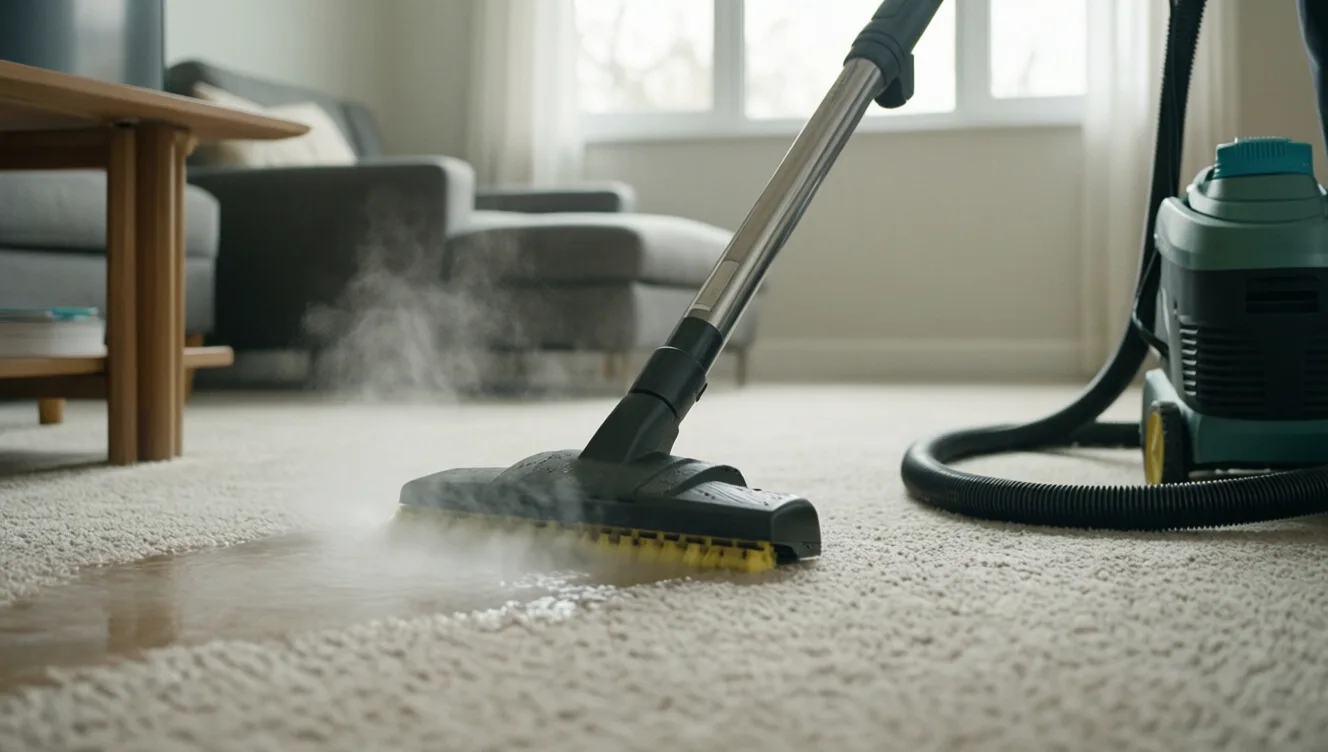
Two things to never do: ammonia-based cleaners (smells like urine to a pet — you've just labeled the spot "bathroom") and steam-only passes on untreated urine — heat without enzyme treatment first can set the protein and bond the odor in.
Why the cover-ups fail
Carpet powders, fabric sprays, and scented candles all do the same thing: add a smell on top of a smell. The crystals underneath keep their schedule. Baking soda is the honest exception — it genuinely absorbs light surface odor — but it does nothing to uric acid either. If a smell survives one proper enzyme treatment, more fragrance is not the answer; more depth is.
When it's a professional job
DIY enzyme treatment wins when the accident is fresh, single, and on the surface. It loses in three situations:
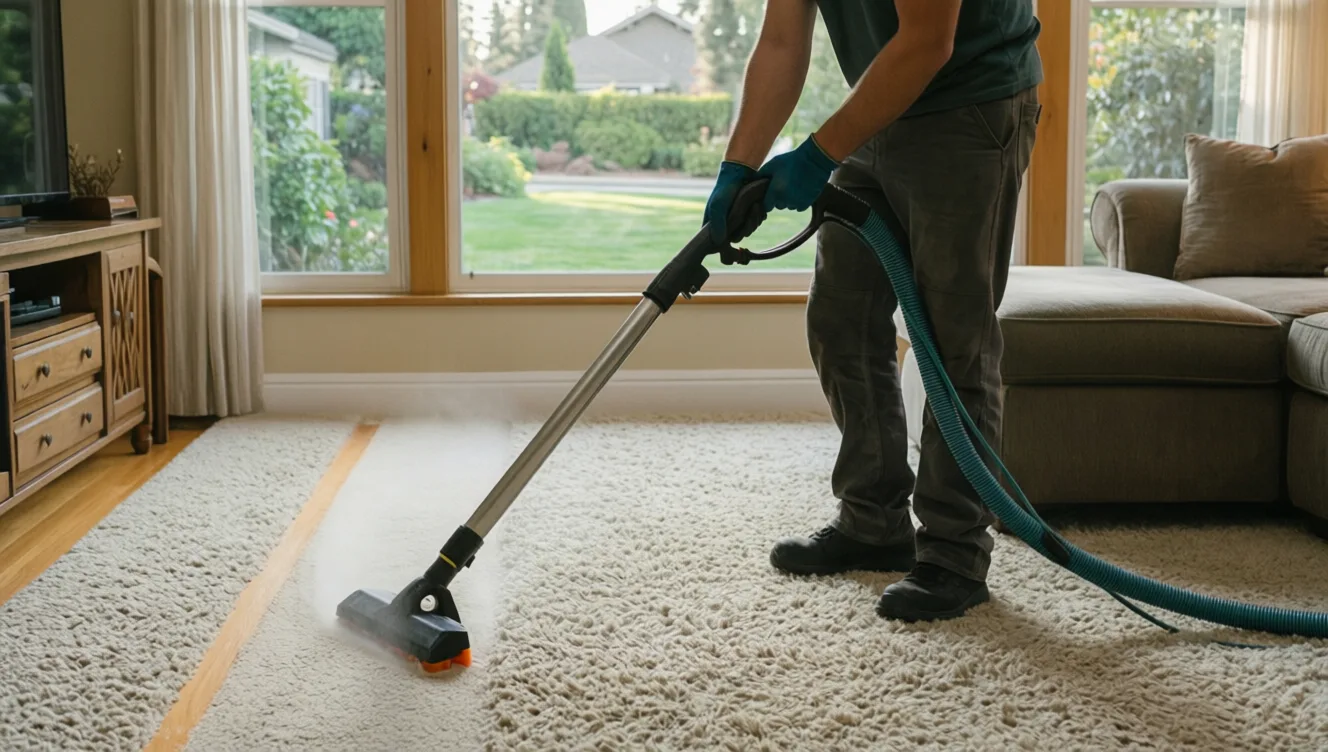
- Repeat marking in one area. Urine wicks downward; by the third accident it's in the pad and sometimes the subfloor, where no consumer product reaches. Professional treatment floods the spot with enzyme, then extracts everything — urine, treatment, and all — with truck-grade vacuum. Bad cases get the pad addressed directly.
- Mystery odor with no visible spot. A whole-room smell that worsens in warm weather usually means multiple old accidents. Pros find them in minutes with UV inspection; homeowners find them never.
- The move-out or the listing. When a deposit or a sale rides on the house smelling neutral to a stranger's nose, a documented professional deep clean is cheap insurance — noses that live with a pet stop hearing what visitors hear immediately.
Fair warning per our honest-expectations rule: urine that has repeatedly soaked a light-colored carpet can leave permanent dye damage even after the odor is fully gone. Extraction removes the smell; it doesn't reverse a chemical bleach spot.
Keeping ahead of it
Living well with pets and carpet is a rhythm, not a rescue: vacuum twice weekly (dander and hair are odor's slow lane), keep enzyme cleaner in the cabinet before you need it, groom the pet on the same schedule as the house, and put the carpet on a professional extraction cadence — every 3–6 months in a pet household does more for how the home smells than any product you can buy → Carpet Cleaning in San Jose: The Complete Owner's Guide
It's exactly what our carpet service does for pet households across San Jose and Santa Clara County: enzyme pre-treatment, hot-water extraction, and a straight answer about what will and won't come out → Carpet cleaning service · Carpet and rug cleaning prices