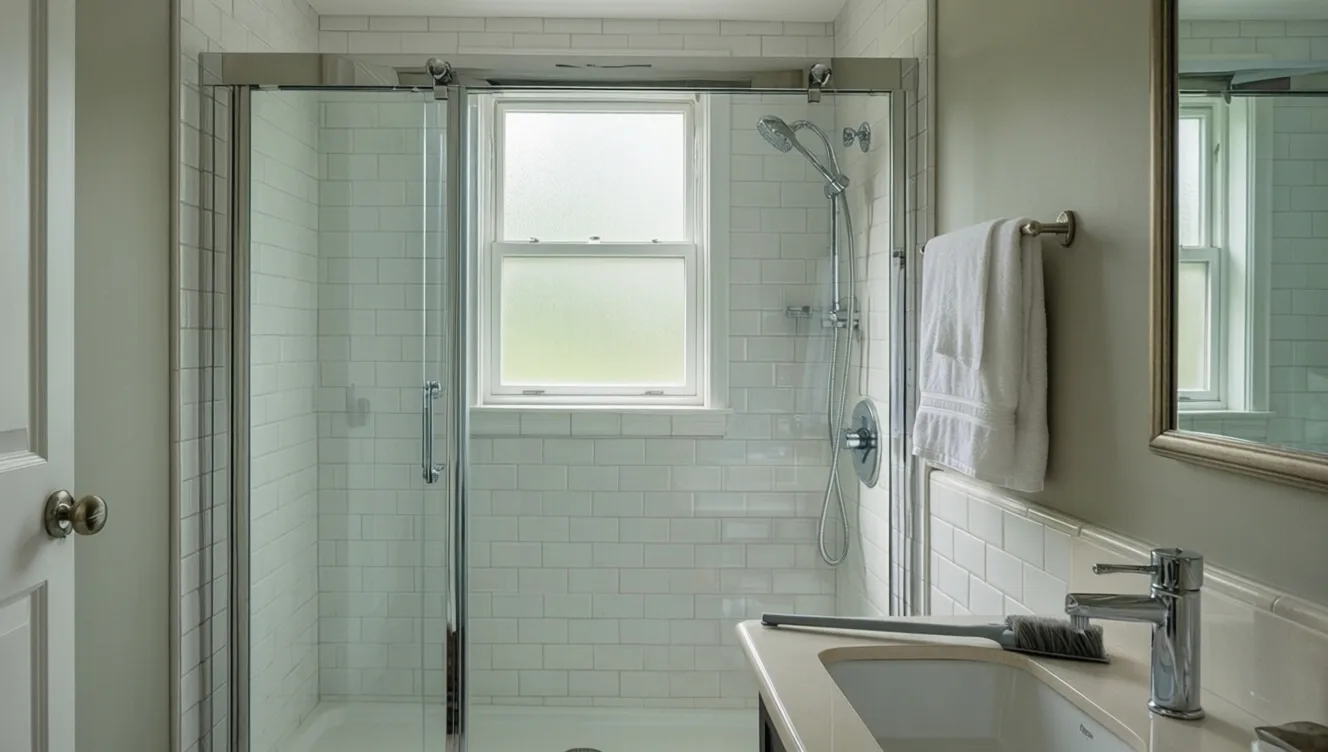
Here's a quiet truth from thousands of bathroom cleanings: almost every home we visit has a bathroom that's cleaned regularly and still isn't clean. That's not a criticism of anyone's housekeeping — it's geometry. Weekly cleaning covers the surfaces you can see and reach in fifteen minutes. A bathroom's grime economy runs in the places that take an hour, a stiff brush, and a reason. Those places are this article.
The seven zones
1. Grout lines. Tile wipes clean; the porous grout between tiles drinks soap scum, body oils, and moisture, then hosts the mildew that makes a scrubbed shower still look dingy. Real grout work is dwell-time chemistry plus brush work, line by line — the single biggest visual difference in a professional bathroom deep clean.
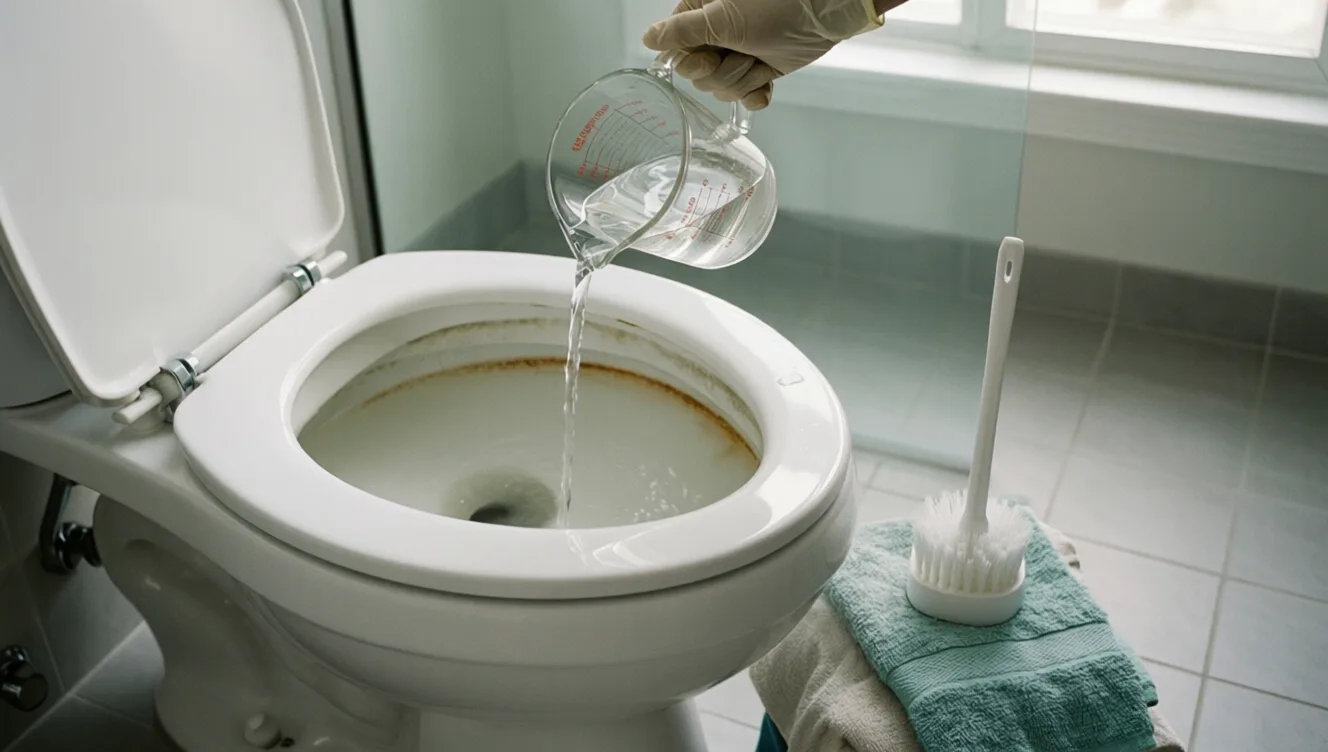
2. Mineral deposits on fixtures. South Bay water runs hard, and Santa Clara and Cupertino homes wear the evidence: the white crust at faucet bases, the clouded showerhead that sprays sideways, the ring where drips dry on chrome. Scale doesn't respond to all-purpose spray — it needs acid chemistry (vinegar at the DIY level, stronger descalers done carefully at ours) and patience. The toilet's version of this problem has its own guide → How to Remove Mineral Stains From a Toilet Bowl (the South Bay Edition)
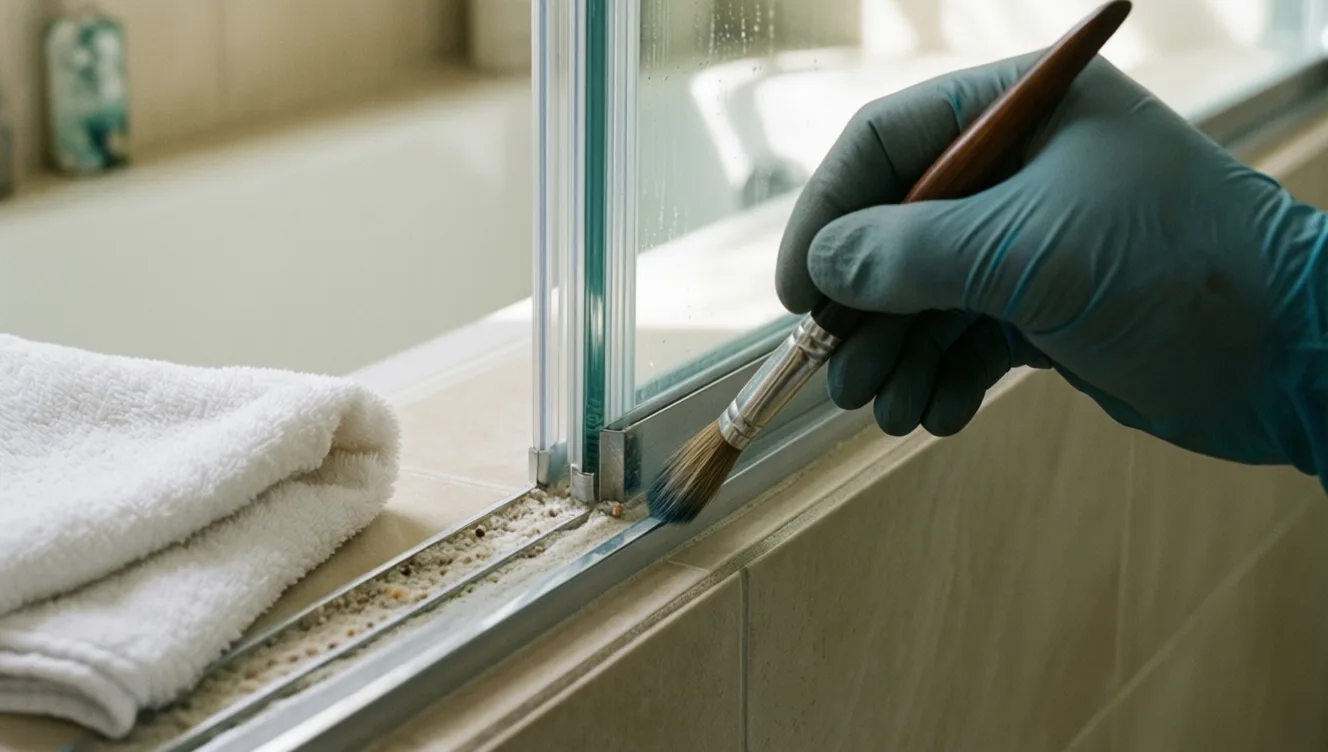
3. Shower door tracks and enclosure corners. The track collects a sediment of soap, scale, and mildew that a cloth can't reach — it's detail-brush territory. Same for the silicone seams at the enclosure's corners, where the first black mildew spots always start.
4. The exhaust fan. Look up. A dust-matted vent cover means the fan is moving a fraction of the air it should, and the bathroom's moisture — the engine of every mildew problem in the room — is staying put. Cover off, washed, fins vacuumed: the least glamorous fifteen minutes in the deep clean and possibly the most consequential → Preventing Mold and Mildew in San Jose Homes: What Actually Works
5. Behind and around the toilet. The base bolts, the floor seam, the wall behind — the zone everyone's mop waves at from a distance. It's reachable only on hands and knees, which is exactly why it's on this list.
6. Ceiling edges and the top of everything. Steam carries residue up: ceiling corners collect a faint film, the tops of mirrors, medicine cabinets, and door frames hold a fuzz of dust bonded with moisture. Eye level lies; the room isn't clean until the parts above it are.
7. High-touch metal. Switch plates, door handles, drawer pulls, the flush lever — touched constantly, disinfected rarely. A deep clean does them deliberately, one by one.
Why it's worth doing on a schedule
None of this is about appearances alone. Grout and seams that stay loaded grow mildew; scale that stays on fixtures etches permanently; a choked vent raises the room's humidity and accelerates everything else. A bathroom deep clean once or twice a year — more for a busy shared bath — resets all seven zones before any of them turns into damage. Between resets, the weekly wipe-down genuinely suffices, because it's finally maintaining a clean room instead of negotiating with a dirty one. (The full step-by-step, if you'd rather run it yourself, is here → Bathroom Cleaning 101: The Three-Clock System That Keeps It Actually Clean)
And when you'd rather hand the brush to someone who does this every day, bathroom-deep work is a core part of our deep cleaning service across San Jose, Santa Clara, Cupertino, and the rest of the county — priced plainly, including as a bathroom-focused visit → Bathroom cleaning service · Bathroom cleaning prices