Most small offices don't have a cleaning problem — they have an ownership problem. Cleaning is officially nobody's job, so it's done by whoever snaps first, to whatever standard their patience sets that day. The fix is the same as for any recurring work: a written checklist, a rhythm, and a name attached to each line. Here's the one we'd hand a five-to-thirty person San Jose office — and, at the end, the honest math on when running it in-house stops being free.
Daily — fifteen minutes at close
Work in order of visibility, because your clients do.
- Reception and client zones first. Clear and wipe the front desk, square up seating and reading material, glass on the entry door. This is the square footage that's doing marketing.
- High-touch pass. Door handles, light switches, the printer panel, shared keyboards in hot-desk areas. One cloth, two minutes, most of the germ transfer in the building.
- Trash where food happens. Break room and reception bins daily; desk bins can wait for weekly unless lunch happened at the desk.
- The sink rule. Dishes done or in the dishwasher at close, no exceptions. A sink that carries inventory overnight recruits more.
- Entry floor spot-check. Whatever the day tracked in, off the tile before it gets ground in tomorrow.
Weekly — the actual cleaning
- Workstations. Wipe shared surfaces and conference tables everywhere; for personal desks, set a clear-to-clean rule — anything left on the desk stays, anything cleared gets wiped. It respects people's stuff and removes the excuse in one move.
- Break room, properly. Microwave interior (the weekly horror), counters, table, appliance fronts and handles, floor. This room ages faster than any other in the office.
- Restrooms. Fixtures, mirrors, dispensers restocked, floor mopped — real cleaning, not a wipe-down. Fair warning: this is the line where volunteer rotations go to die, and the reason most offices eventually make the call at the end of this article.
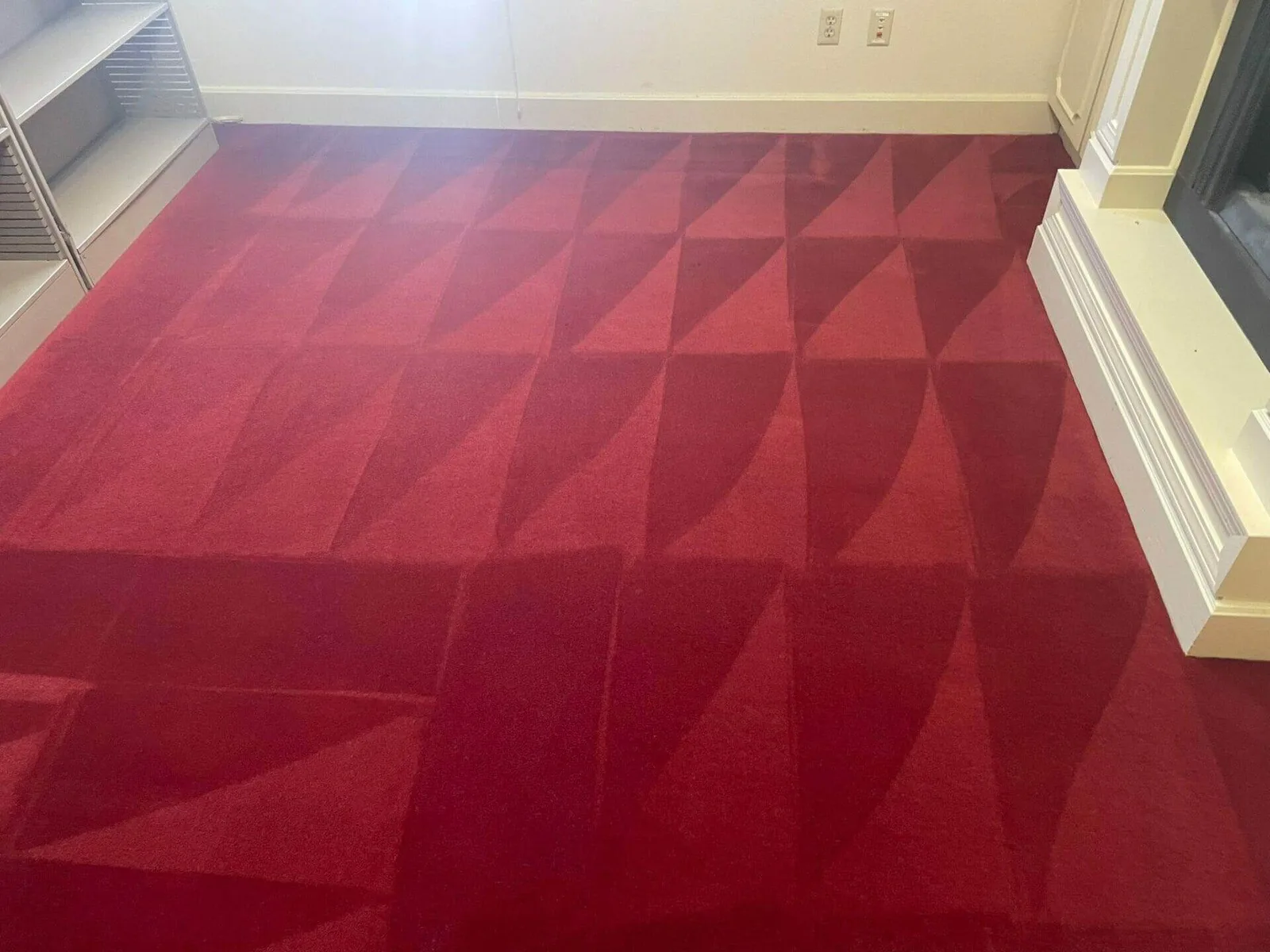
- Floors throughout. Vacuum all carpet, mop hard surfaces. Commercial carpet is deceptive — it hides soil in the pile and looks fine right up until it suddenly doesn't, and by then the fibers are being ground down. The schedule that prevents it → How Often Should Commercial Carpets Be Cleaned? (A Schedule That Works)
Monthly — what nobody sees until they do
- The fridge amnesty. The break-room fridge is office politics in appliance form, and diplomacy loses. Replace it with policy: last Friday of the month, everything unlabeled or expired leaves, no appeals. Post the rule on the door; the rule takes the blame so no person has to.
- Dust high and low. Vents and returns, sills, baseboards, cabinet tops, monitor backs — the gray film that assembles itself at the pace eyes adjust to.
- Glass and partitions. Interior glass, partition panels, and every smudge at hand-height on the conference room door.
- Entry mats. Vacuum both sides and check the wear. Mats are the cheap machine that protects the expensive carpet behind them.
- Conference room reset. Chairs wiped, table polished, cables tamed, whiteboard actually erased. It's the room clients see second.
Making it survive contact with a busy week
Three rules keep a checklist from becoming a laminated decoration. Assign every line to a name, not a team — "everyone's" tasks are no one's. Tape the list inside the supply cabinet, not in a shared doc nobody opens with a spray bottle in hand. And size the daily list to survive your busiest day: if it can't be done in fifteen minutes during a product launch, it isn't a daily list, it's a wish. Trim it until it's honest.
The math on hiring it out
Run honestly, the checklist above costs about an hour a day of somebody's time across the week — and that somebody has a salary. Cleaning done by your team is billed at your team's rate, done to an amateur standard, and it's the first thing skipped in any busy week, which is exactly when the office looks worst. The rotation collapses by week three; the office manager inherits it; resentment compounds quietly.
Three things you're actually buying when you hand it off:
- Your payroll back. Staff hours go to the work you hired them for; the cleaning gets done by people equipped for it, faster and to a professional standard.
- Consistency. Your team's eyes calibrate to gradual decline — a client's don't. A fixed schedule means the office looks the same on a random Wednesday as it does before a big meeting.
- Liability off your desk. Restroom sanitation, chemical storage, wet floors — improvised by untrained staff, these are risks; handled by an insured crew, they're line items.
What's worth hiring isn't a janitorial body in the building — it's this same checklist, run on a consistent schedule by a crew whose entire job is the detail work, scoped to your office and priced like it → Office cleaning service
And if your office has carpet, put its cleaning cycle on the calendar the same way — appearance is a business asset here, and carpet is most of the floor → Why Commercial Carpet Cleaning Is a Business Decision, Not a Chore