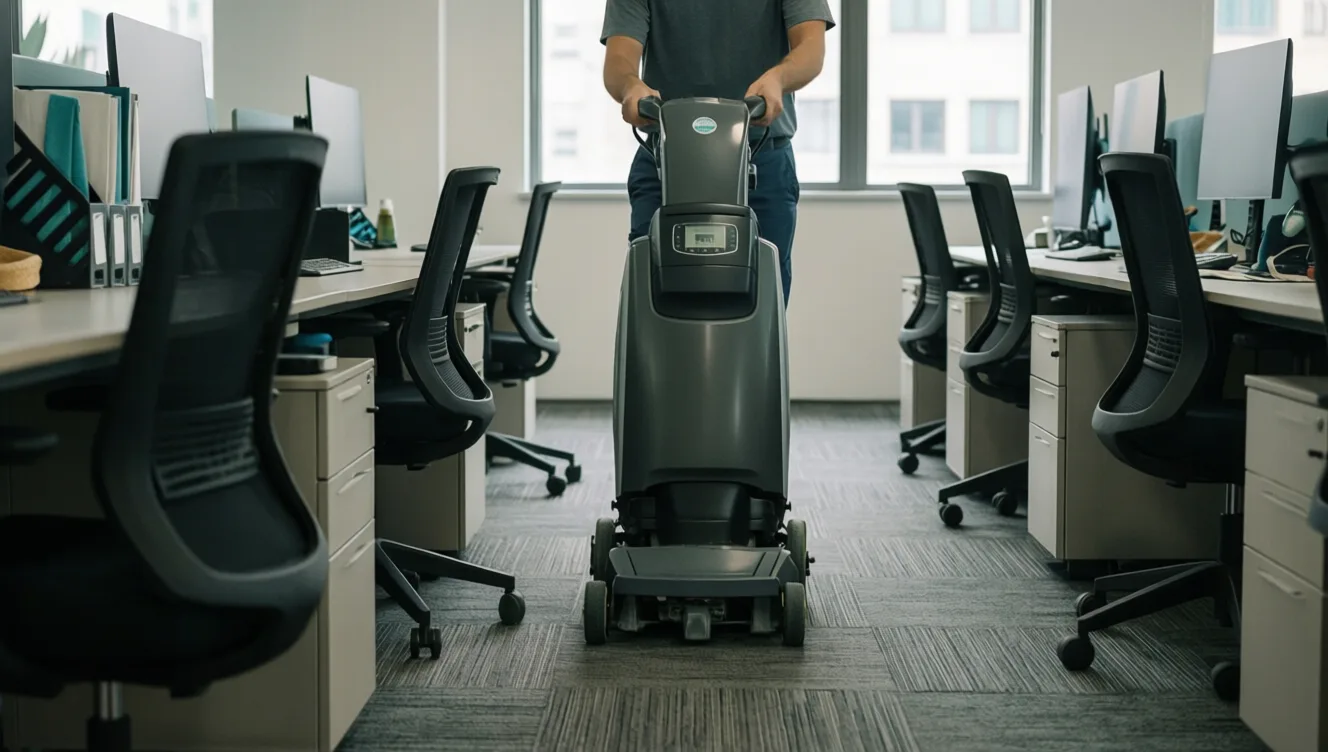
Walk into any office in San Jose and your opinion of the company forms before anyone says hello — and the floor is doing more of that talking than most operators realize. Gray traffic lanes read as deferred maintenance. Fresh, uniform carpet reads as a business that handles details. Neither impression is fair, and both are permanent. That's the surface reason commercial carpet cleaning matters; the deeper reasons are financial.
The asset math
Commercial carpet is a five-figure line item that fails in a completely predictable way: dry grit settles into the pile, foot traffic grinds it against the fibers like sandpaper, lanes mat and gray, and replacement arrives years ahead of schedule. The failure is mechanical, which means it's preventable — remove the grit on a real cadence and the same carpet routinely lasts twice as long. Against replacement cost across a full floor plate, a scheduled cleaning program is the cheapest insurance in the building. Waiting for the carpet to look dirty is how the expensive version happens: by the time lanes are visibly gray, the abrasion has been running for months and the wear is banked.
There's a second, quieter line item: liability. Soiled, matted carpet and the occasional un-treated spill are slip-and-trip material, and workplace incidents cost more than any cleaning contract.
The people math
An office carpet is the building's largest air filter. It traps the dust, pollen, and dander that would otherwise circulate at desk height — until it fills, at which point every footfall re-launches the inventory into the air your team breathes for forty hours a week. Regular extraction empties the filter, and the effect is measurable where it counts: fewer allergy complaints, better air, and a space that smells like nothing at all — which is exactly what clean smells like. For clients who bring customers on-site, the same cleaning that protects employees is protecting every first impression at the door.
What a real program includes
Not all "commercial carpet cleaning" is the same service, and the honest menu has three parts:
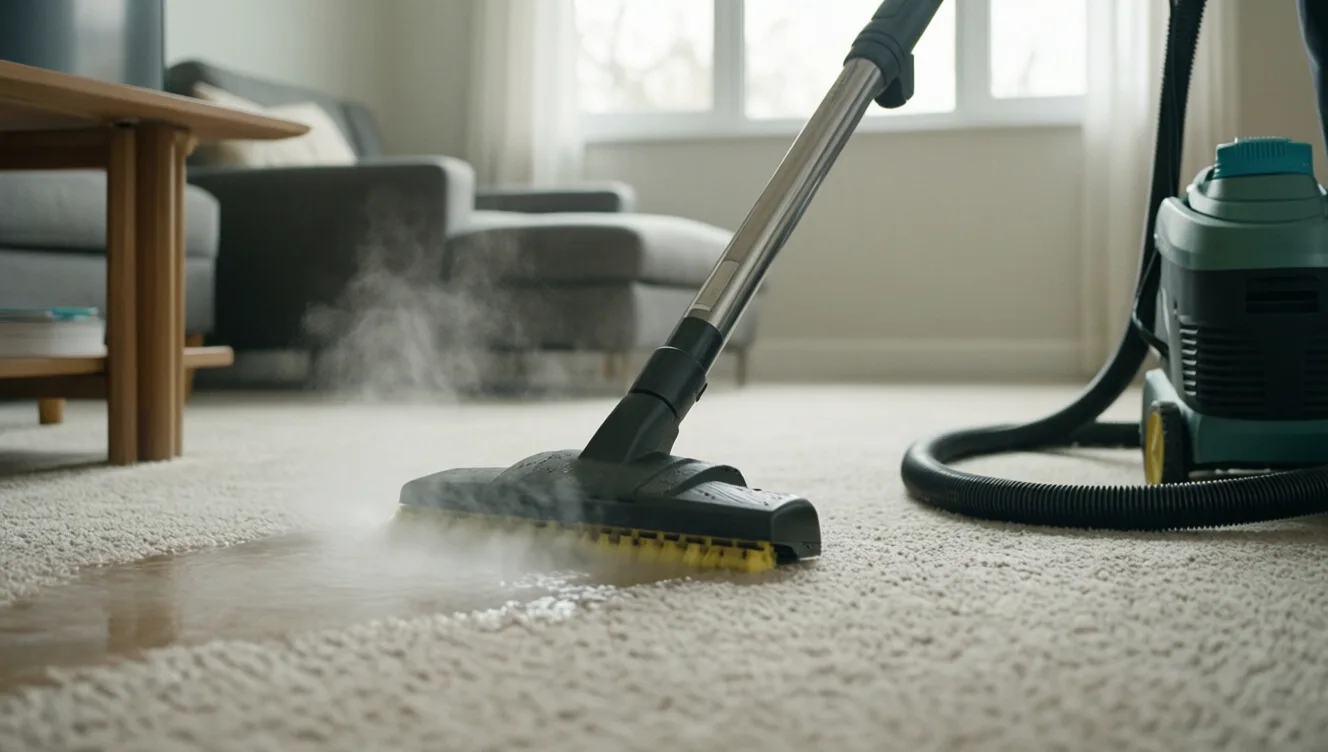
- Hot-water extraction — the deep clean that flushes the pile to the backing and removes the oily film that bonds soil to fiber. This is the backbone; everything else is maintenance between extractions.
- Encapsulation — low-moisture interim cleaning that crystallizes surface soil for next-day vacuuming. Fast dry-down, good for keeping big floor plates presentable between deep cleans. A supplement, not a substitute.
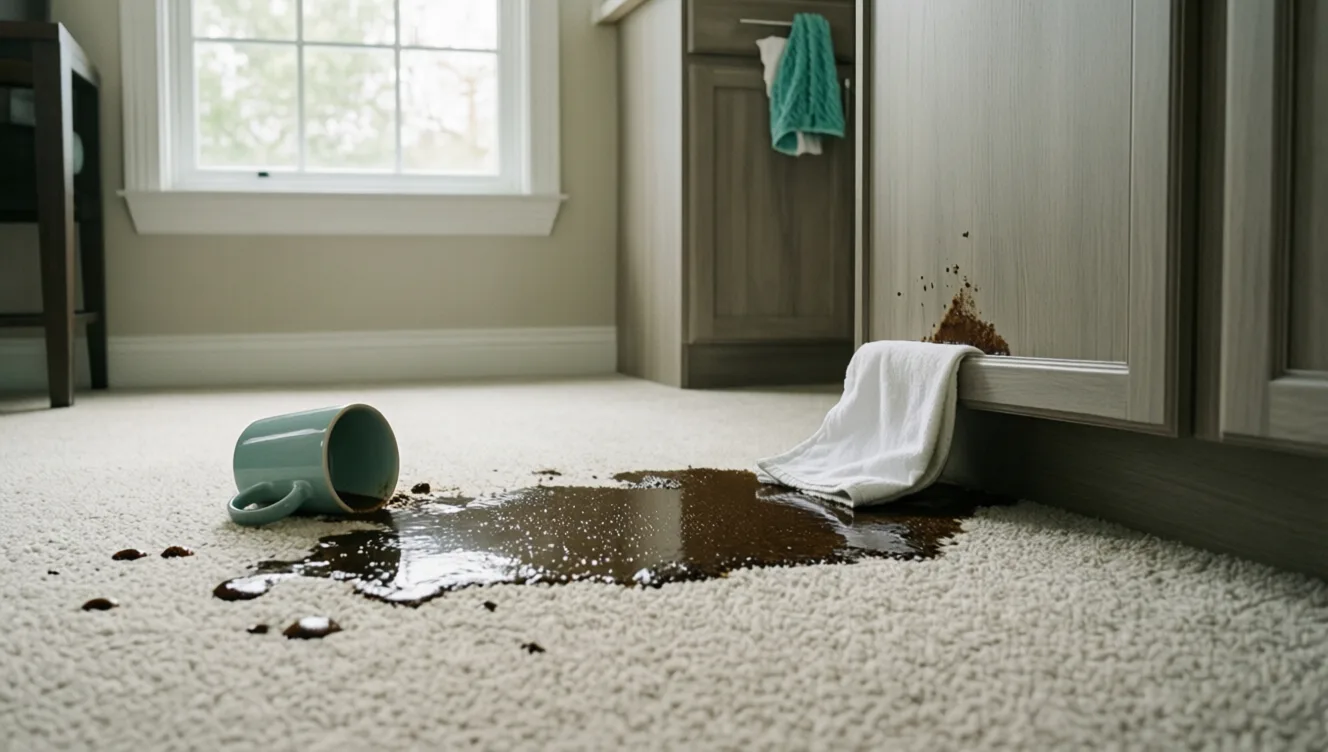
- Spot service — because coffee spills don't wait for the quarterly visit, and a stain treated this week is a stain; treated next quarter it's a floor feature.
The cadence that ties these together depends on exactly one variable — foot traffic — and we've published the schedule we give facilities managers, tier by tier → How Often Should Commercial Carpets Be Cleaned? (A Schedule That Works)
What to ask a vendor
Skip the brochure adjectives and ask four questions: What equipment do you run? (truck-mounted extraction is the commercial standard), When do you work? (evenings and weekends, so carpets are clean and dry before the first badge-in — non-negotiable), What's the dry-down time? (a real number, not "fast"), and What does the program cost per visit, in writing? A vendor with plain answers to all four is a vendor who's done this before.
That's the service we run for offices across San Jose and Santa Clara County — scheduled extraction, off-hours crews, written pricing, and floors that say the right thing about your business every morning → Commercial carpet cleaning