Glass stovetops look delicate and clean like glass — which misleads people in both directions. The surface is a tough glass-ceramic that tolerates more than you'd think, and the things that actually scratch it are almost never the ones people fear. Two rules govern everything: never clean it hot, and never drag grit across it. Scratches on glass cooktops come overwhelmingly from debris trapped under a moving cloth or pan base — not from the tools cleaning guides warn you about.
Daily: the after-dinner wipe
Once the surface is fully cool, wipe it with a damp microfiber cloth — thirty seconds that removes the film and crumbs before heat cycles bake them in. Tonight's wipe is next week's not-scrubbing. If you use a spray, make it one rated for glass cooktops (or plain diluted vinegar); all-purpose cleaners with ammonia can stain the surface, and anything abrasive is off the table permanently — no scouring powder, no steel wool, no green scrub pads. Ever.
Weekly: the baking-soda reset
For the cooked-on rings and shadows the daily wipe leaves behind:
- Clear the loose debris first — a damp cloth pass so nothing gritty rides under your scrubbing. This step is the anti-scratch insurance.
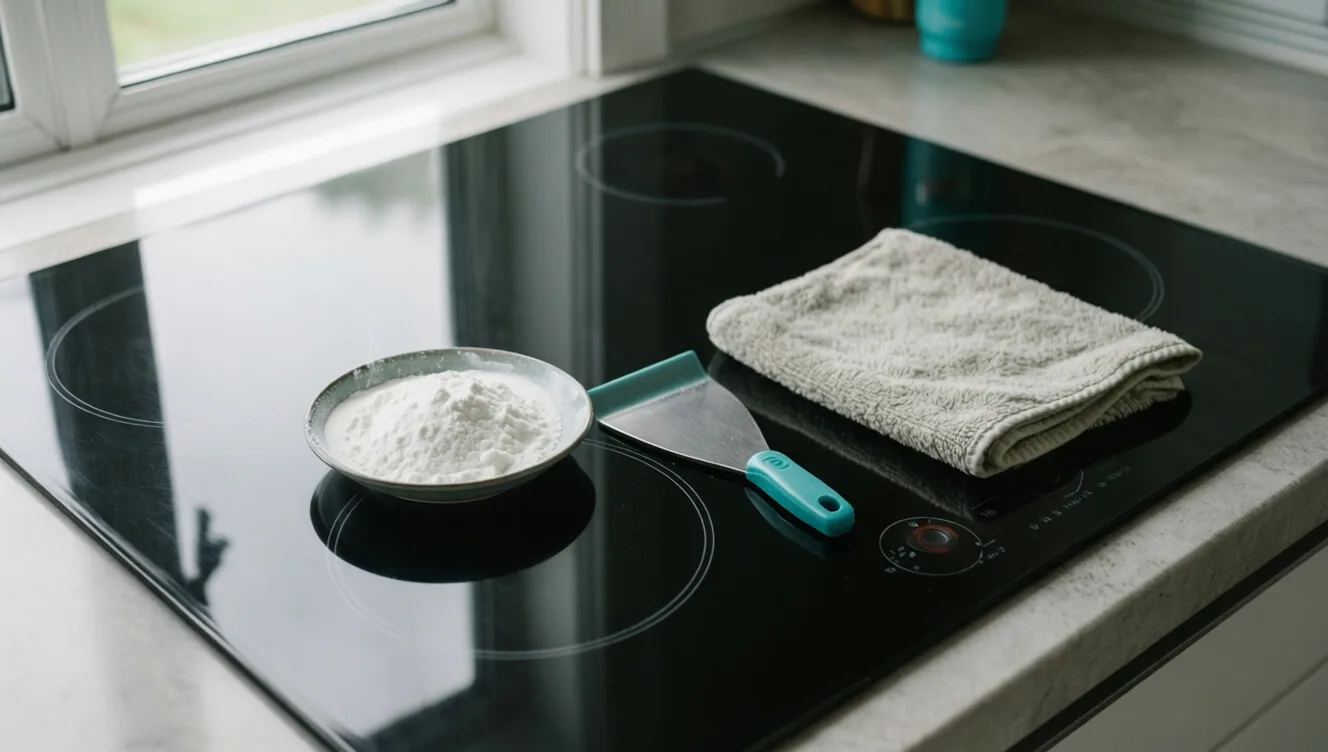
- Paste of baking soda and water spread over the marks; some people lay a hot-water-wrung towel over it. Give it 10–15 minutes.
- Scrub gently with a non-abrasive sponge in circles. The paste is mildly abrasive in exactly the safe range — it polishes off residue without touching the glass.
- Wipe clean, then buff dry with fresh microfiber to kill streaks. Vinegar-then-buff is the streak-free finisher if your water is hard — and San Jose's is.
The razor truth
Here's where we correct the internet: a single-edge razor scraper, held at a shallow angle on a cool, damp surface, is the manufacturer-endorsed tool for burnt-on deposits — check your cooktop's manual and you'll likely find it recommended by name. The blade rides flat and lifts the deposit; it can't dig in at a low angle. What ruins cooktops is the opposite instinct: grinding at a burnt spot through a sponge, with the deposit's own hard crumbs doing the scratching. Scrape gently, wipe away what lifts, repeat. (Corner of the blade, steep angles, or a dry surface — that's how the tool goes wrong. Angle low, pressure light.)
The one genuine emergency: sugar
Boiled-over jam, caramel, or anything sugary is the exception to "clean it cool": molten sugar can bond with and pit the glass-ceramic as it hardens. Manufacturers' guidance: move the pan off, and carefully scrape the bulk of the sugar off while still warm (oven mitt on the scraper hand), then finish the residue with the normal routine once cool. It's the one stovetop mess where waiting makes it permanent — which is our honest-expectations note for this surface: pits and deep scratches don't polish out. Prevention is the whole game.
A clean stovetop is the centerpiece of a kitchen that reads clean — the rest of that room's system is here → The Minimalist Kitchen: Why Less Stuff Is a Cleaning Strategy — and when the whole kitchen needs the reset treatment, cooktop included, that's a standing service → Kitchen cleaning service · Kitchen cleaning prices