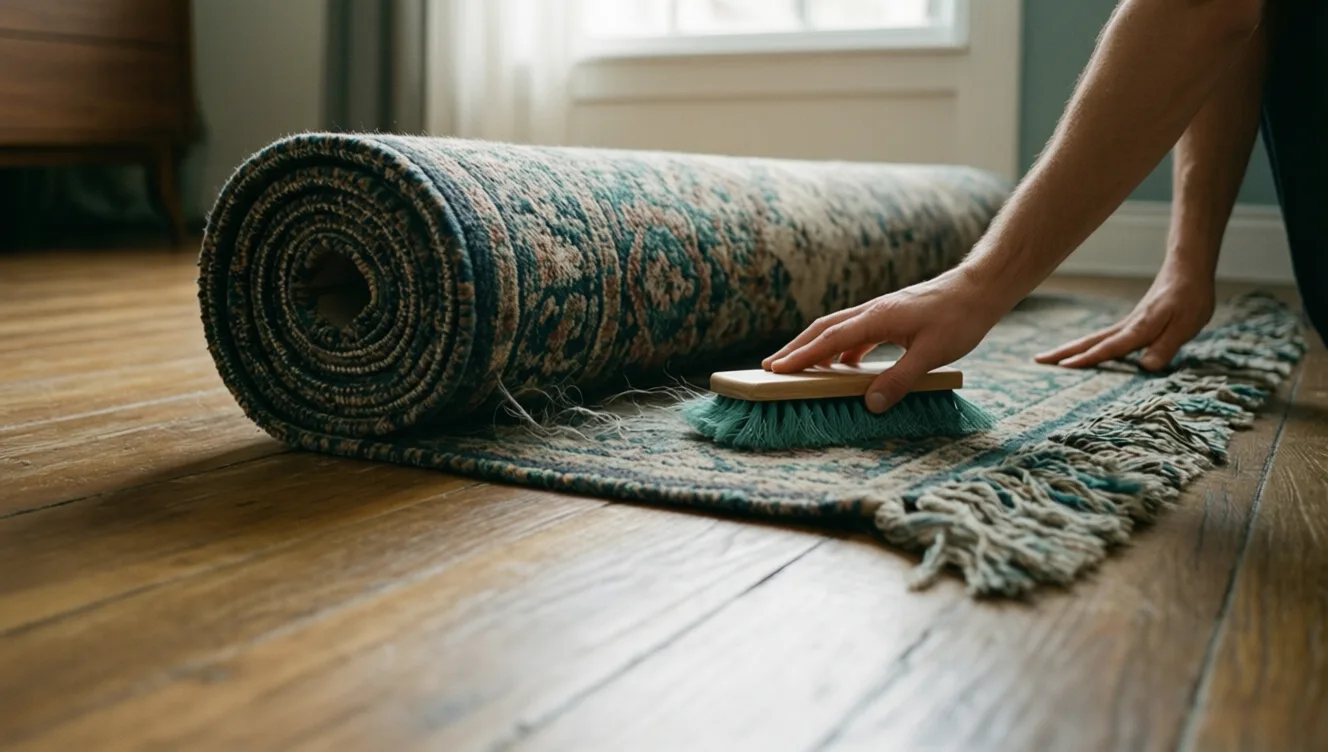
The most expensive rug mistake in San Jose isn't neglect — it's treating a rug like a small carpet. Wall-to-wall carpet is one known fiber on a stable backing, engineered to survive hot-water extraction. A rug can be wool, silk, cotton, jute, viscose, or polyester; dyed with anything; backed with nothing. With rugs, the fiber decides everything, so this guide is organized the only way that works: know your fiber first, then act.
Finding out what you own
The care tag, if it survived, answers this. Without it: natural fibers (wool, silk, cotton) feel matte and organic and cost more; synthetics (nylon, polyester, polypropylene) feel slick and spring back from a squeeze. When it matters — an inherited piece, anything hand-knotted, a rug you'd grieve — get an identification before any cleaning happens. A hand-knotted rug is identifiable from the back: the pattern shows through in individual knots, and that rug should never meet a DIY method at all.
What each fiber tolerates
Wool — durable and naturally soil-resistant, but it hates two things: heat and alkalinity. Cool water only, mild neutral detergent, gentle low-suction vacuuming so the fibers stay in the pile. Hot water shrinks wool; harsh cleaners strip its lanolin and dull it permanently.
Silk and viscose — no water, no DIY, no exceptions. Water spots, distorts, and browns these fibers; even a well-meant damp blot can leave a permanent mark. Vacuum gently, and leave everything else to a specialist.
Cotton and flat-weaves — many small ones machine-wash on gentle (check construction, not just fiber — glued backings don't survive washers). Line dry; dryer heat shrinks and warps them.
Jute and sisal — dry methods only. Plant fibers brown when wet, the way a paper bag does. Vacuum, blot spills instantly with a dry cloth, and skip every wet recipe on the internet.
Synthetics — the forgiving ones. Nylon and polyester tolerate the same soap-and-water spot cleaning as carpet, and most machine-made synthetic rugs handle a careful extraction clean without drama.
The routine every rug shares
Fiber decides the method; the rhythm is universal. Vacuum weekly — and flip the rug to vacuum the back a few times a year, which shakes loose the grit that grinds at the foundation. Rotate the rug 180° twice a year so sun-fade and traffic wear land evenly instead of writing a permanent diagonal across it. Use a rug pad — it stops the slide, cushions the foundation against the floor, and doubles the rug's life for the price of a pizza. And blot spills the minute they happen with plain water or club soda; on rugs, yesterday's spill is this year's stain.
When it's a professional's rug
Three honest triggers: value (hand-knotted, antique, sentimental — the cost of professional care is noise against replacement), fiber (silk, viscose, jute, anything you can't identify), and failure (a stain that survived your fiber-appropriate attempt, pet odor in the foundation, or a rug that smells musty — moisture in a rug's core doesn't dry from the surface). Area rugs also hide their biggest secret underneath: check the floor below twice a year, because a rug can hold moisture against hardwood long before anything shows on top.
We clean rugs across San Jose and Santa Clara County with the method the fiber calls for — extraction where it's safe, dry methods where it isn't, and a plain answer when a piece needs a specialist's bench instead of an in-home clean → Carpet cleaning service · Carpet and rug cleaning prices
Wall-to-wall carpet is its own system with its own guide → Carpet Cleaning in San Jose: The Complete Owner's Guide