The refrigerator is the only appliance that stores what you eat, runs around the clock, and gets cleaned roughly never. It deserves a real deep clean every season or two — and done as a workflow instead of a guilt spiral, the whole job takes about an hour. Here it is, in order, including the step at the end that almost everyone skips.
1. Triage the food
Everything out onto the counter — perishables into a cooler if you'll be more than twenty minutes. Now the audit: expired items and mystery containers out, duplicates consolidated, and the honest condiment reckoning (the three mustards know what they did). An emptier fridge isn't just tidier; it cools more efficiently and lets you actually see your inventory, which is how food stops dying forgotten in the back.
2. Shelves and drawers take a bath
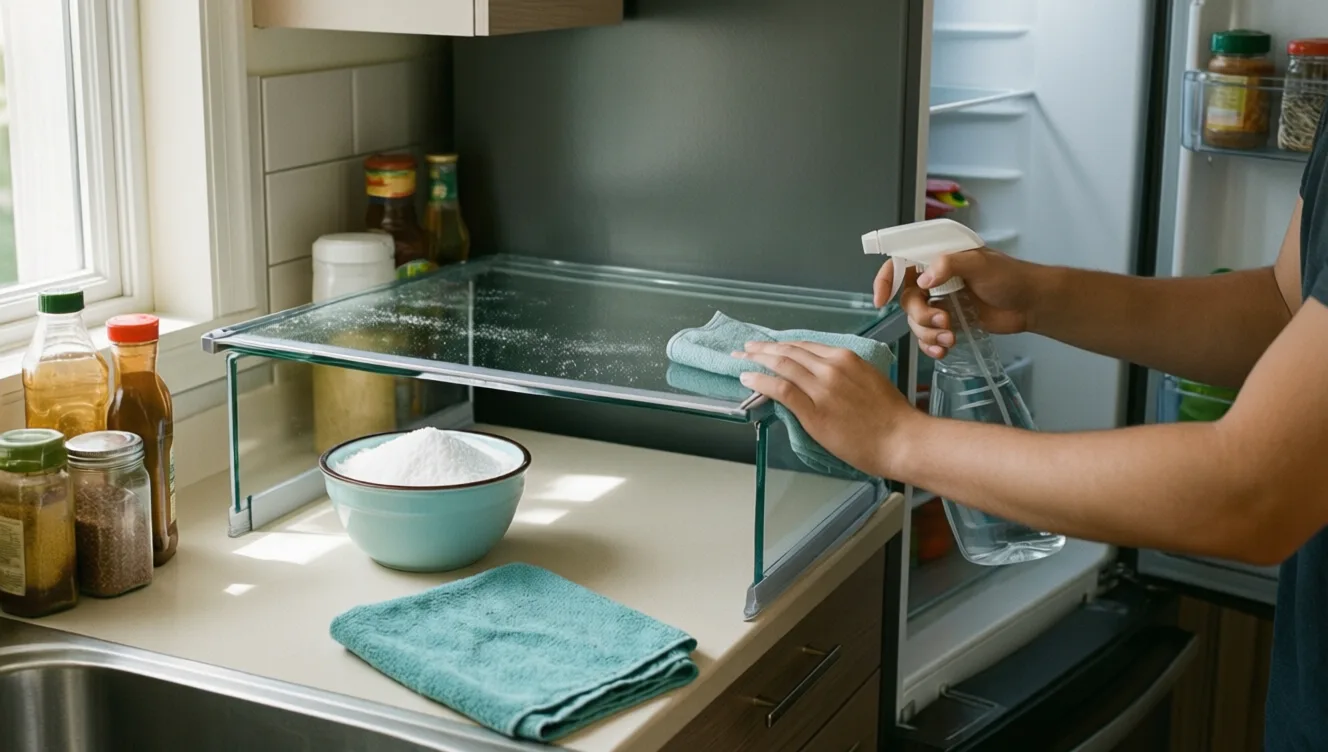
Removable shelves and bins go to the sink for warm soapy water — with one physics warning: cold glass shelves meeting hot water can crack. Let them reach room temperature first, or run the water tepid. Dry everything completely before it returns; a wet shelf in a cold box is frost and drip-tracks waiting to happen.
3. Interior: mild, food-safe, nothing perfumed
Wipe every interior surface — walls, door, gasket folds (crumbs and mildew's favorite hideout), the drip channel — with cool water and mild dish soap, or a baking-soda solution. The rule with reasons: this box holds open food, so harsh sprays and fragranced cleaners are out — their residue and odor transfer to everything with a surface. Stubborn dried spills soften under a warm wet cloth laid on for a few minutes; scraping frozen-on gunk scratches liners.
The odor fix that actually works: a fresh open box of baking soda after the clean absorbs everyday odors for about three months. A fridge that still smells after cleaning has a hidden source — check the gasket folds, the drip pan underneath, and the drain hole at the back of the interior, in that order.
4. Freezer, while you're in the neighborhood
Frost-free freezers just need the same empty-audit-wipe treatment. Manual-defrost models get defrosted first — towels down, patience up, never an ice pick (one punctured coil totals the appliance).
5. The part everyone skips: the coils
Underneath or behind the fridge live the condenser coils — and when they're wearing a sweater of dust, the compressor works harder, your electricity bill quietly rises, and the appliance ages faster. Twice a year: unplug, pop the base grille (or walk the fridge out), and vacuum the coils with the brush attachment. Ten minutes, real money, and the deep clean's most adult step. Wipe the door exterior and handles on the way out — stainless with the grain — and plug back in.
Keeping it clean between deep cleans
Three habits carry the season: wipe spills when they happen (a fridge spill today is a shelf-bath next month), run a weekly 60-second scan for anything going soft or fuzzy, and do the door-shelf wipe when you put groceries away. The fridge interior is also part of every move-in/out clean we run and a favorite add-on to kitchen deep cleans — the appliance handled while the rest of the kitchen gets the same standard → Kitchen cleaning service · Kitchen cleaning prices
The rest of the kitchen's system → The Minimalist Kitchen: Why Less Stuff Is a Cleaning Strategy