Here's an uncomfortable piece of arithmetic: you spend roughly a third of your life in direct contact with your mattress, shedding skin cells and a liter-class volume of moisture into it every night — and it's probably the least-cleaned surface you own. The skin cells feed dust mites; the mites' droppings are one of the most common indoor allergens; and the whole economy runs invisibly, eight inches under your face, for years. The fix is six habits, none of them hard.
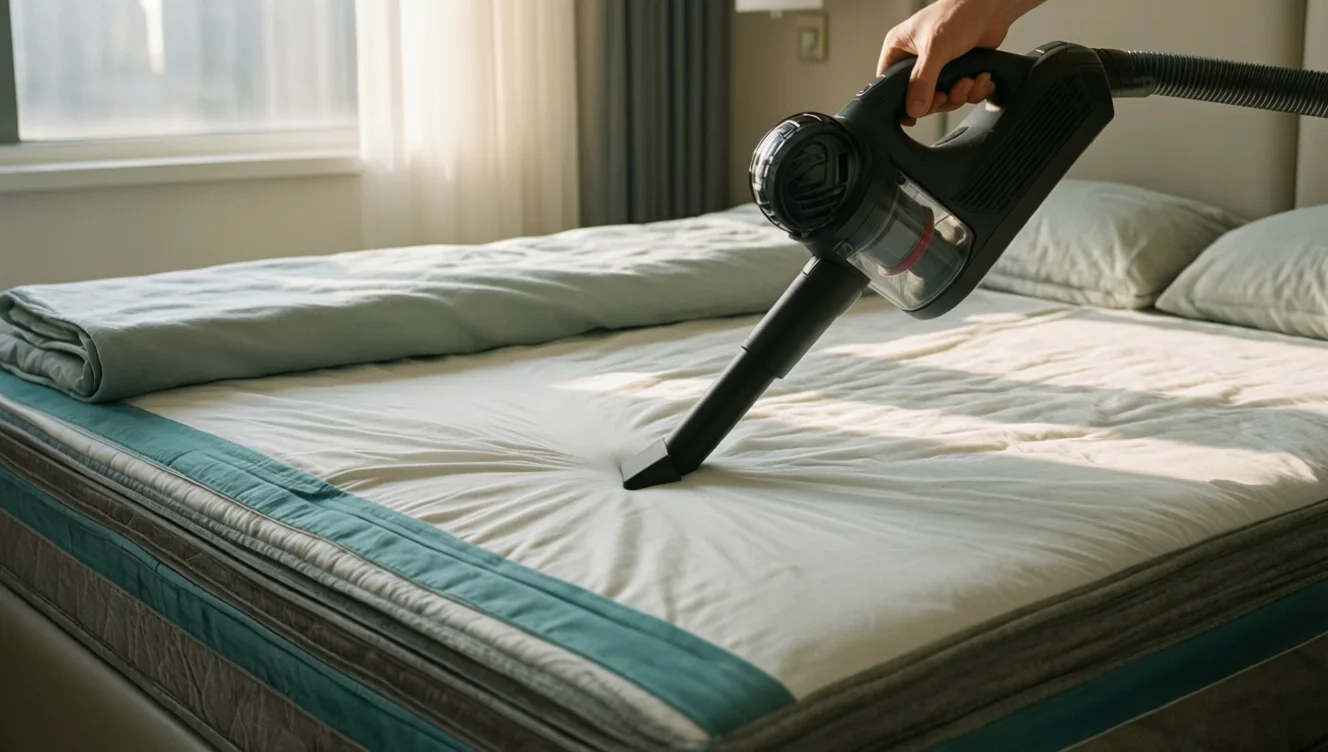
1. Vacuum it monthly. Upholstery attachment, slow passes, extra time on seams and crevices where the debris concentrates. This is the habit that removes the mites' food supply — the one intervention that shrinks the whole ecosystem. Strip-the-bed day is the natural trigger: sheets in the wash, vacuum on the mattress, five minutes.
2. Put a protector on it today. A washable, waterproof, hypoallergenic protector is the single best money in sleep hygiene — it intercepts sweat, oils, spills, and allergens before they reach the mattress, and unlike the mattress, it goes in the washing machine. Wash it monthly with the vacuum habit. Every year without one ages a mattress like three.
3. Rotate it twice a year. 180 degrees every six months distributes wear so body impressions don't dig permanent trenches (flip it too if it's a two-sided mattress — most modern ones aren't). Sagging isn't just comfort; a hammocked mattress collects moisture where it dips.
4. Air it out. On sheet-changing day, leave the mattress bare with the windows open for a few hours. Overnight moisture is the mattress's chronic problem — trapped, it feeds mites and mustiness; ventilated, it leaves. A few hours of indirect sun and moving air is a free reset.
5. Spot-treat accidents immediately — and gently. Blot (never rub), then work a mild detergent solution in with a barely-damp cloth, blot dry, and let it air completely before remaking the bed. The cardinal rule: keep a mattress as dry as possible while cleaning it. A soaked mattress can't drain and can't be wrung — moisture that goes deep stays deep, and mildew follows. Biological stains want an enzymatic cleaner, lightly applied, same rule.
6. Deodorize with baking soda. A generous layer over the whole surface, a few hours of dwell, vacuum it off. It pulls odor and residual moisture at once — the finishing move after airing or spot-cleaning.
When the six habits aren't enough
Some situations are past the home routine: a mattress that triggers morning congestion despite the protector-and-vacuum regimen, set-in stains, lingering odor from a pet accident or illness, or the simple realization that the mattress is years deep and has never once been properly cleaned. Professional mattress cleaning — deep vacuum extraction, targeted stain treatment, deodorizing — recovers what home tools can't reach, and it pairs naturally with upholstery cleaning for the sofa that's running the same invisible economy in the living room → Carpet cleaning service · Upholstery and mattress cleaning prices
Allergy-prone households: the mattress is one node in a bigger system — the carpet version of this problem is here → Do Carpets Make Allergies Worse? The Answer Depends Entirely on One Thing