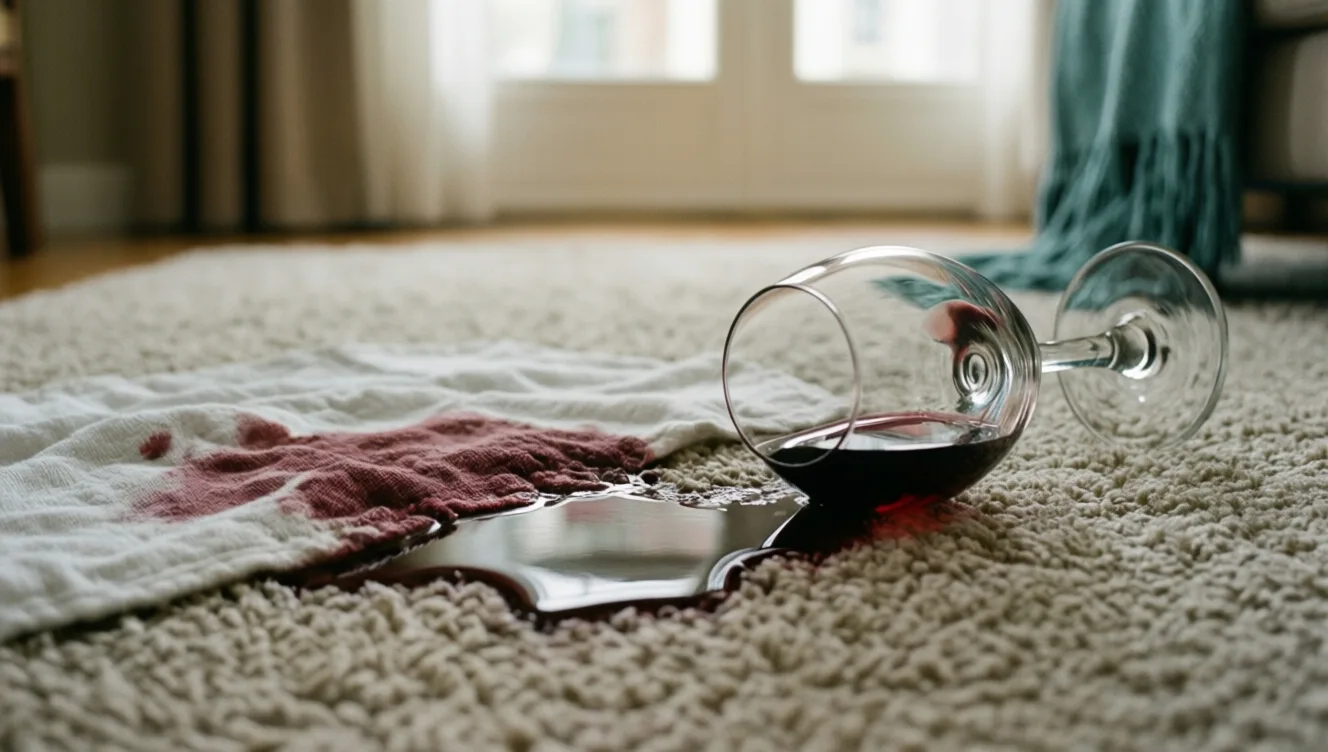
Red wine on carpet triggers the same instinct in everyone: scrub. It's the one move that guarantees a permanent stain. Wine is a dye dissolved in liquid — while it's wet, it's removable; the moment you grind it into the fibers or let it dry untreated, it starts bonding. The first five minutes decide everything, so here's the sequence, in order.
Minute one: blot, never rub
Grab the cleanest absorbent thing within reach — white towel, paper towels, a stack of napkins. Press straight down on the spill and lift. Rotate to a dry section and press again. You're pulling liquid UP out of the pile; rubbing pushes dye sideways and down into the backing, where no home remedy reaches. Keep blotting until the towel comes up nearly dry.
Minute two: dilute what's left
Pour a small amount of cold water on the stain — just enough to loosen the remaining wine, not enough to soak the pad underneath — and blot again. Cold, always: heat helps dye set. Two or three dilute-and-blot rounds will pull a surprising amount of color out before you've used a single product.
The working solution
For what remains, mix two parts hydrogen peroxide to one part dish soap. First, test it somewhere hidden — inside a closet edge, under a sofa — because peroxide can lighten some dyed carpets. If the test spot holds its color, apply the mixture to the stain, let it sit for a few minutes, then blot. Repeat until the color stops transferring to your towel.
Two alternates that earn their shelf space:
- A dedicated wine remover (Wine Away is the standard) — apply, let it saturate a few minutes, blot.
- The vinegar route for mild residue: one tablespoon white vinegar in two cups of water, applied and blotted.
Finish every method the same way: a final pass with clean water to lift soap residue (leftover soap becomes a dirt magnet), then dry towels pressed down — stand on them if you have to — and let the spot air-dry fully.
Wool and natural fibers: gentler rules
Synthetic carpet forgives experimentation; wool doesn't. On wool or any natural-fiber rug, skip the peroxide, keep everything cold and dilute, and blot with patience instead of chemistry. If the rug matters to you — handmade, inherited, expensive — stop after the cold-water stage and call a professional. Rug dyes and wine dyes are close cousins, and aggressive treatment removes both.
The dried stain you found the next morning
Not hopeless — just slower. Rehydrate the stain with cold water, give it ten minutes, and work the peroxide mixture in gentle rounds. Expect improvement, not perfection: a dried, set stain has had hours to bond, and some percentage of it usually stays. This is the honest line most guides skip — and it's the difference between what home treatment can do and what hot-water extraction equipment does. Professional carpet cleaning pulls dissolved residue out of the pile and the pad with vacuum pressure a towel can't match, which is why a "permanent" stain often isn't.
When to call it
Call a professional when: the stain is larger than your hand, it's on wool or a rug you care about, it's been dry for more than a day, or you've treated it twice and the color has stopped improving. Every additional home treatment past that point risks setting what's left. In San Jose and Santa Clara County, that's exactly the call we take — often the morning after a very good dinner party → Carpet cleaning service
Keep this handy: the whole method in one line — blot, cold water, peroxide + dish soap (tested first), rinse, dry. Tape it inside the pantry door next to the wine rack.