Cabinets are the furniture you touch most and think about least — opened dozens of times a day, framing every meal, and expected to look good for decades with no maintenance at all. Mostly they oblige, because cabinetry really has only two enemies: grease film and moisture. Beat those two and everything else is detail.
Enemy one: the invisible grease film
Every stovetop session sends vaporized oil into the air, and it condenses on the nearest vertical surfaces — cabinet faces, most of all the ones flanking the range. The film builds by molecules: nothing today, a faint tackiness in a month, and in a year a dull amber layer that's bonded with dust and stubborn as varnish. The routine that beats it:
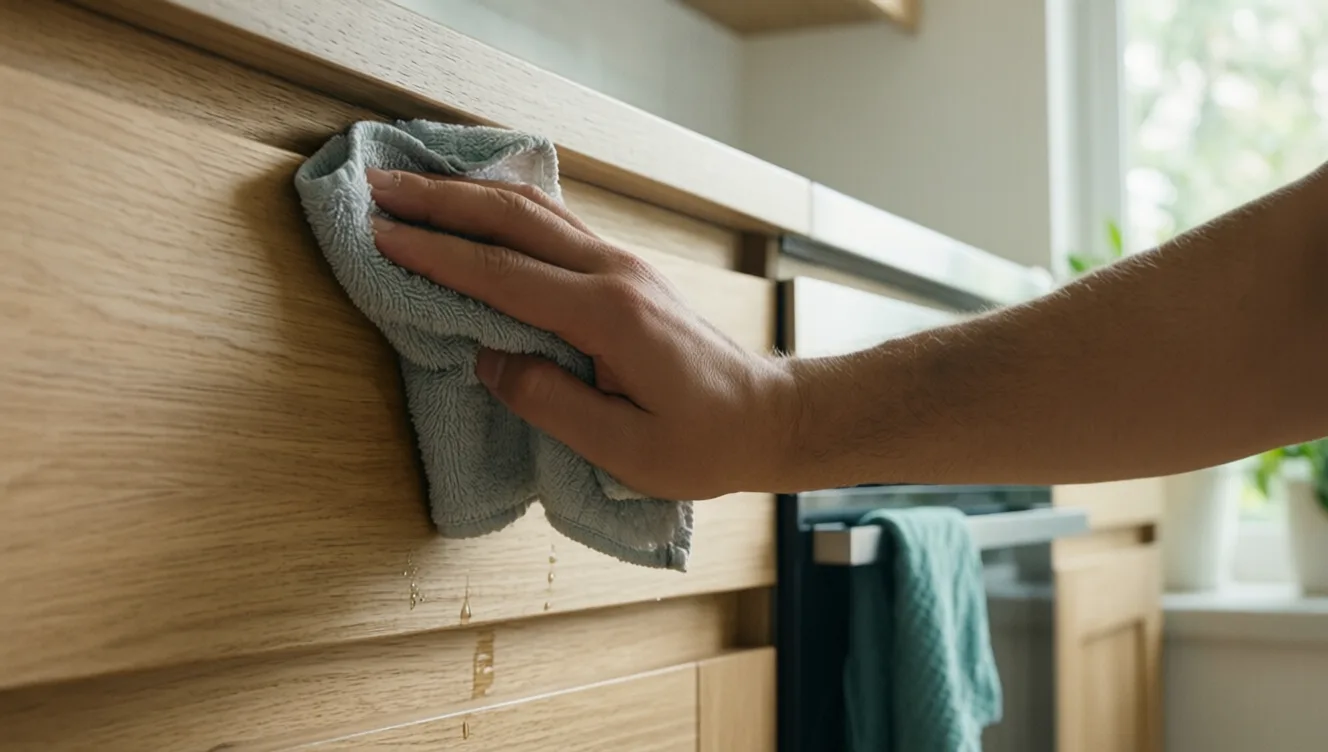
- Weekly: a wipe-down of the high-traffic faces (around handles, near the stove) with a barely-damp microfiber cloth — with the grain on wood. This intercepts the film while it's still loose.
- Monthly: a proper degrease of the stove-adjacent faces: a few drops of dish soap in warm water (dish soap is a degreaser — it's the whole reason it exists), wrung-out cloth, gentle circular work, then a dry-cloth pass immediately — see enemy two.
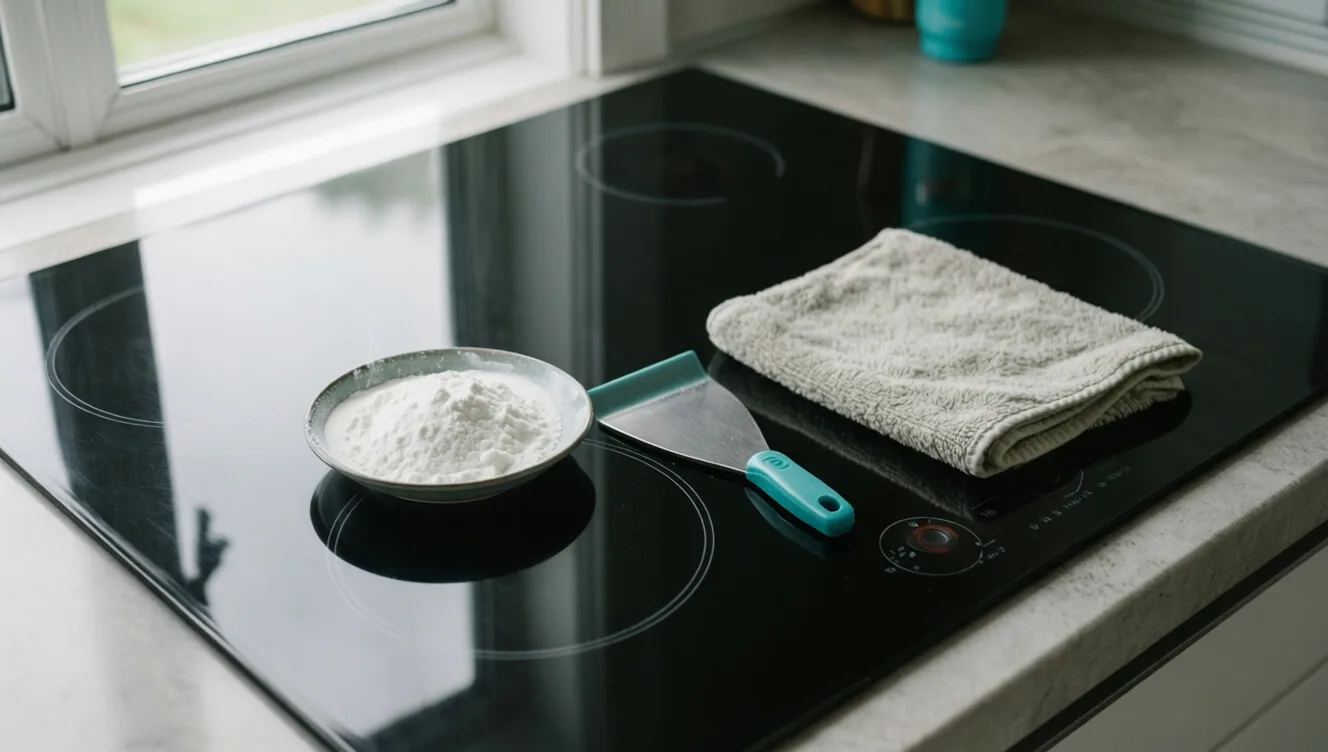
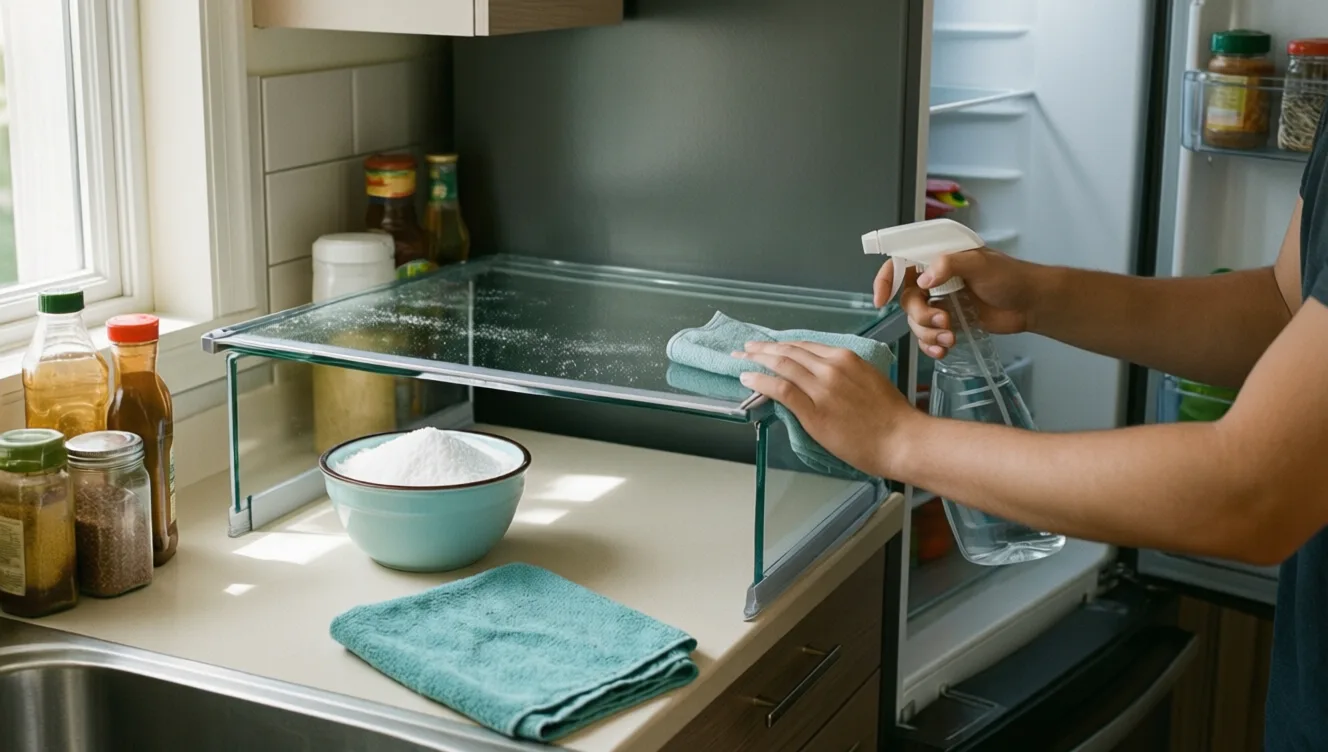
- The already-sticky cabinet: the gentle escalation is a baking-soda paste worked softly with the grain, rinsed with a damp cloth, dried at once. Never steel wool, never abrasive powders, never harsh solvent cleaners — every one of them trades a grease problem for a permanent finish problem.
Range-hood discipline is cabinet care by other means: a hood that's actually run (and actually clean → How to Deep Clean a Range Hood (and Why Your Filter Is a Fire Risk)) intercepts the grease before it ever reaches the doors.
Enemy two: moisture
Wood cabinets and water are a slow-motion feud: swelling, warping, peeling veneer, cloudy finish. The defenses are habits, not products — wipe splashes and steam condensation as they happen, never hang wet towels over doors, dry every surface you've wet-cleaned, and mind the chronic drip zones: around the sink, above the dishwasher's steam vent, under the coffee maker. The under-sink cabinet is its own battleground with its own guide → Water Is Killing Your Kitchen Cabinets (Slowly, and Preventably)
The interiors (twice a year is plenty)
Cabinet insides live easier lives: empty a section, vacuum the crumbs, wipe shelves with the mild solution, dry, restock — rotating through the kitchen twice a year, ideally paired with the spring and holiday resets → The San Jose Spring Cleaning Checklist (One Weekend, Whole House) Shelf liner makes the next round a lift-and-replace job. Bathroom vanities run the same play with more humidity urgency.
The five-minute annual inspection
Once a year, be your cabinets' handyman for five minutes: tighten hinge and handle screws (loose hardware wears the wood around it, and a sagging door scrapes its neighbor's finish), check for chips and worn spots — touch-up markers handle small wounds before moisture finds bare wood — and glance at the sun-exposed faces. Prolonged direct sunlight fades and dries finish unevenly; a curtain adjustment now beats mismatched cabinets later. If the finish is genuinely failing — cloudy, alligatored, worn through — that's a refinisher's project, not a cleaning one; per the honest-expectations rule, no product wipes years back onto a finish.
Cabinet exteriors are part of every kitchen deep clean we run, and interiors join the scope on deep and move-in/out visits — the full kitchen treatment, priced plainly → Kitchen cleaning service · Kitchen cleaning prices