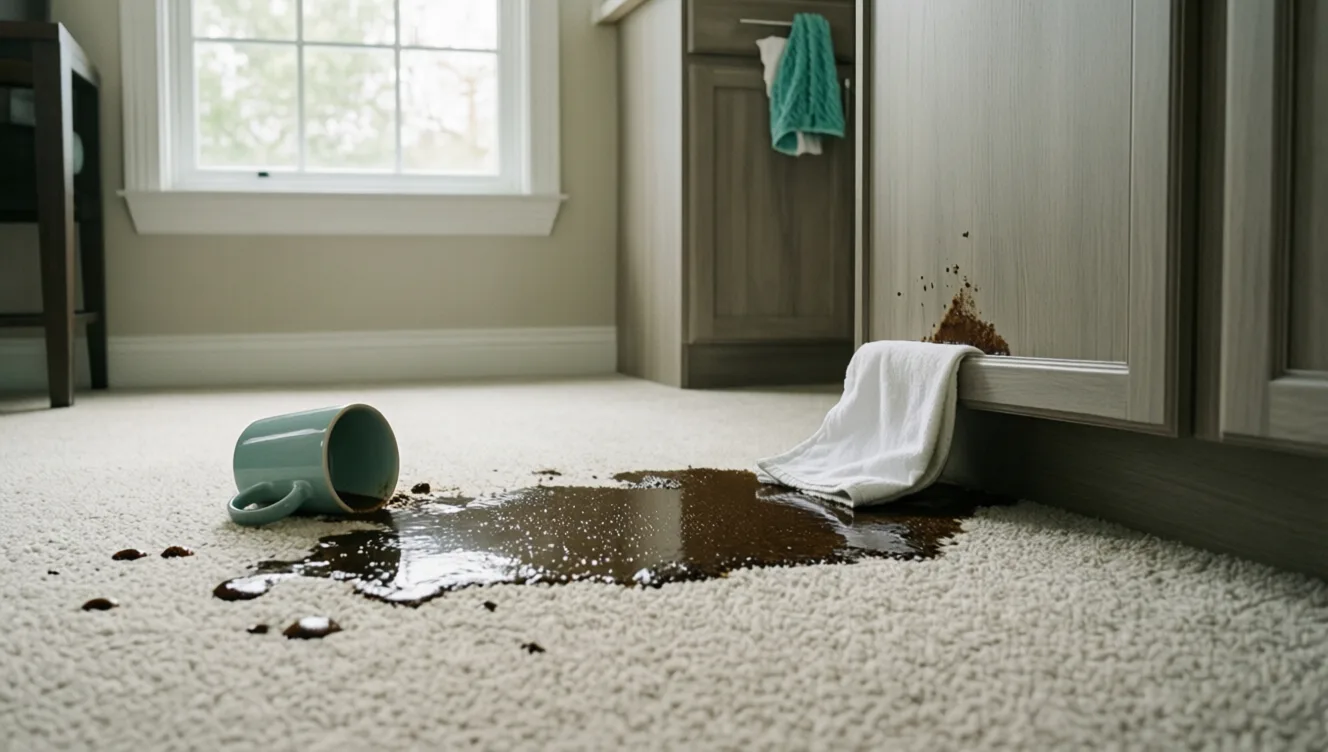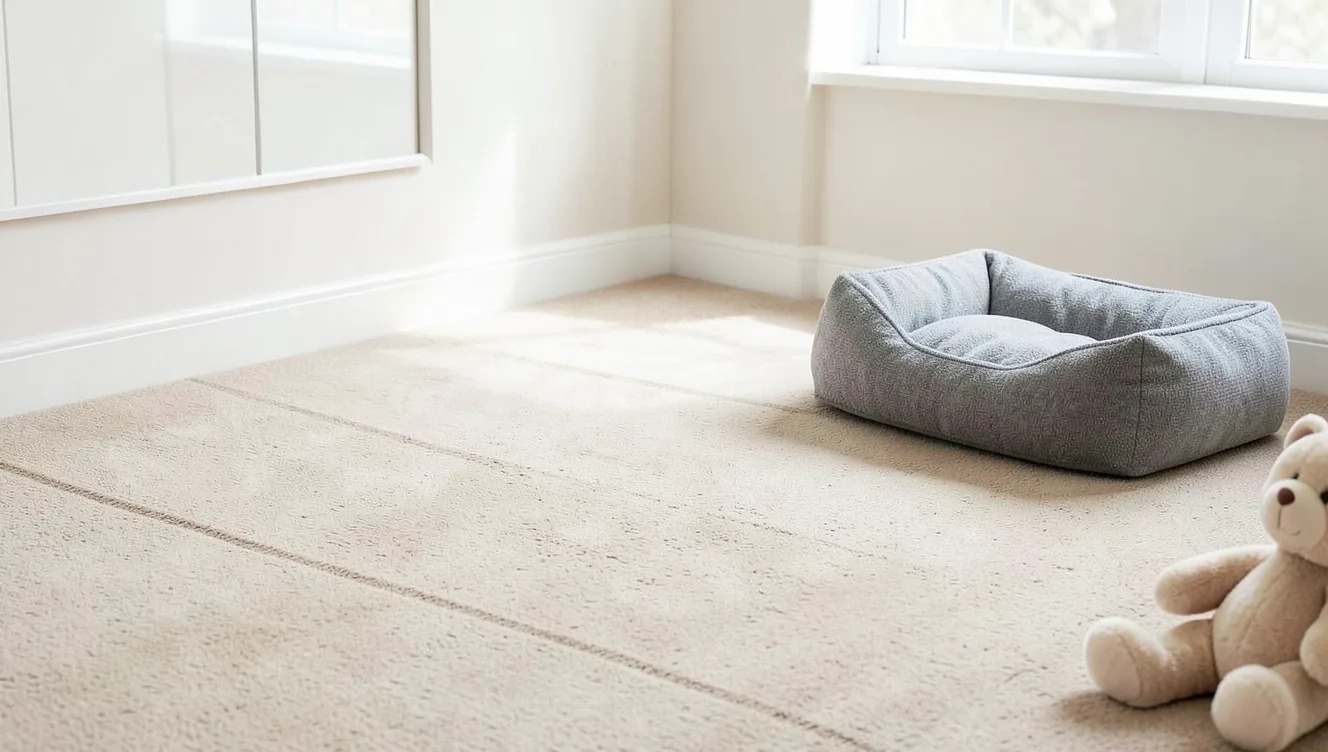
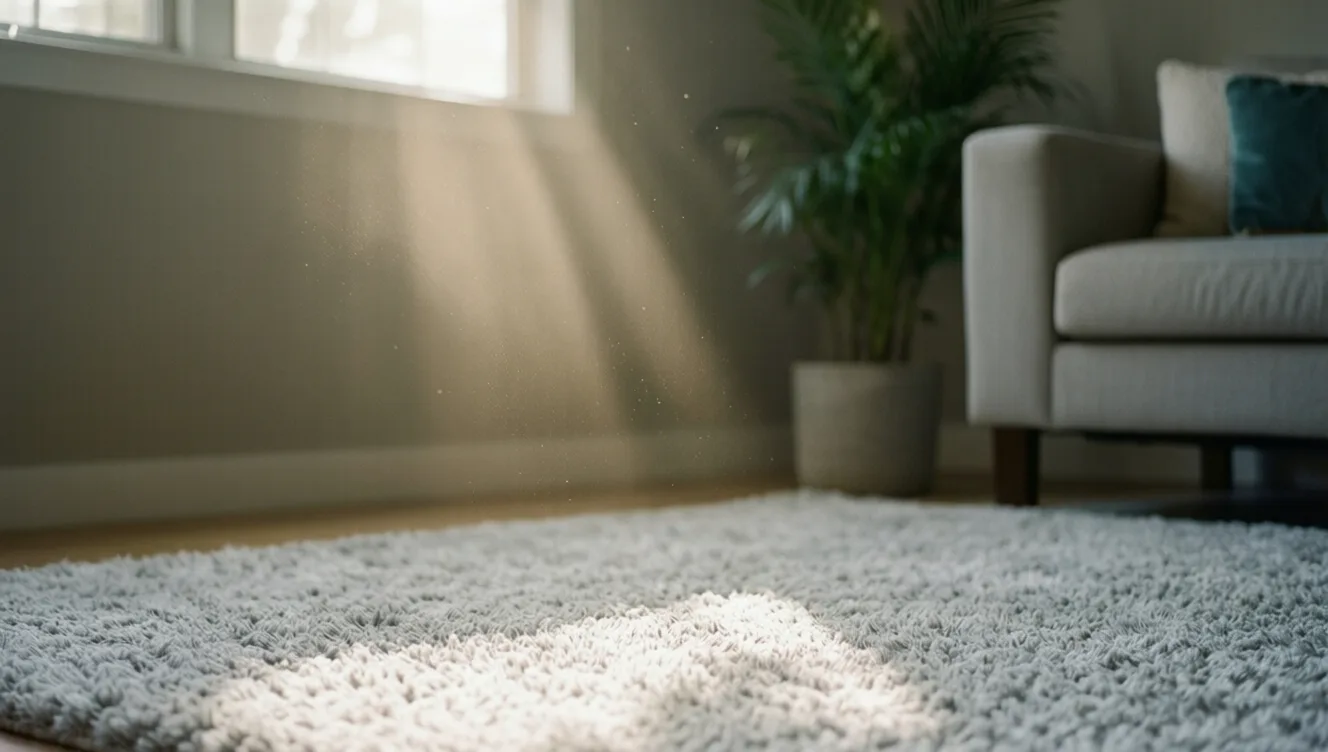
Ask around and you'll hear carpet described as an allergy sufferer's enemy — a wall-to-wall reservoir of dust mites, dander, and pollen. Ask a flooring scientist and you'll hear something stranger: homes with maintained carpet often measure better air quality than homes with hard floors. Both camps are looking at the same fact from different sides.
Carpet is a filter
Here's the physics. Allergens are light — dander floats, pollen drifts, dust rides air currents. On hard flooring, every footstep and every pass of a dry mop kicks that material back into the breathing zone, where it stays suspended for hours. Carpet catches it. Fibers hold allergens down at floor level, out of your lungs, until something removes them.
That's the filter thesis, and like every filter, it has a catch: a filter is only as good as its emptying schedule. A furnace filter nobody changes becomes the dirtiest thing in the system. Carpet is the same. Maintained, it's the largest air filter in your house. Neglected, it's a loaded reservoir that re-emits with every step — and at that point the critics are right.
What "emptying the filter" means
Two layers, two tools:
Vacuuming clears the surface layer — twice a week, with a HEPA-filter machine. The HEPA part isn't optional for allergy households: a cheap vacuum inhales allergens at the floor and exhales the finest ones back into the air at nose height. And note vacuuming's limit — it removes loose surface material only.
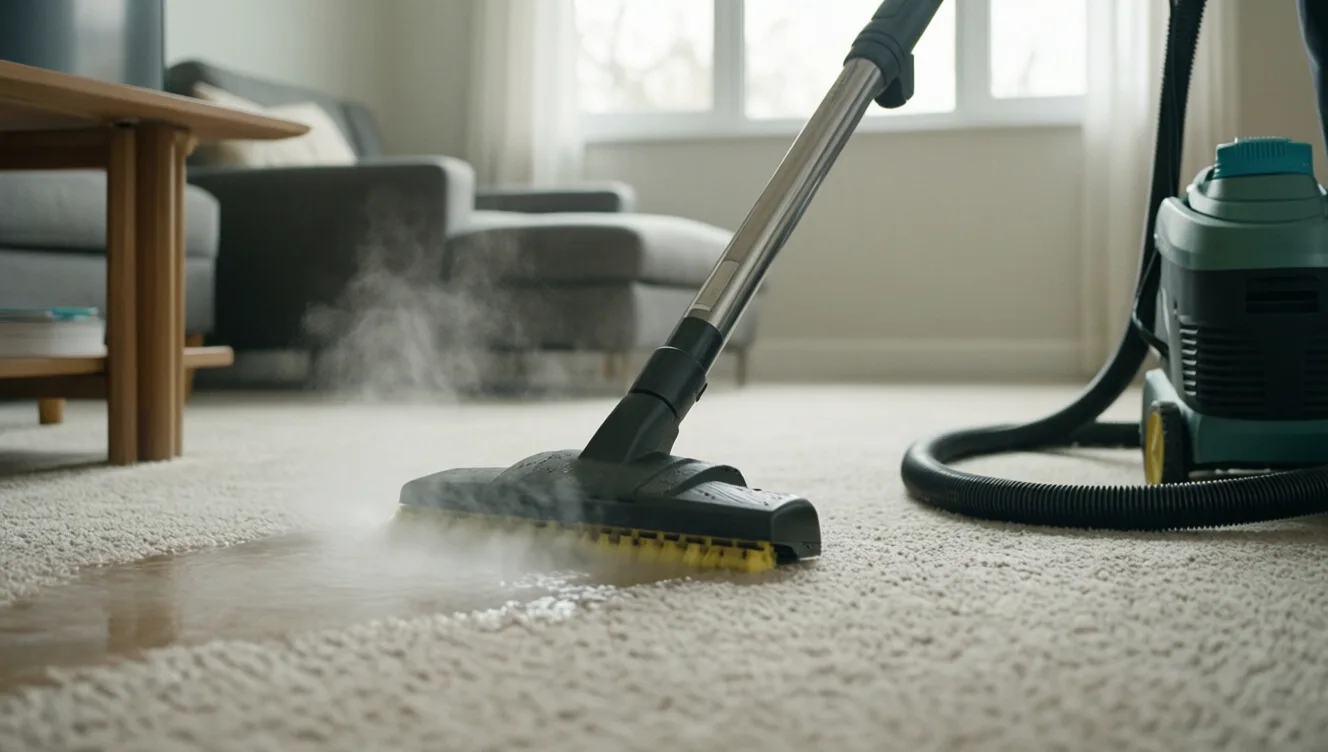
Extraction clears the reservoir. The allergens that matter most live deep in the pile and bond with the oily soil film vacuums can't touch: embedded dander, pollen, and the dust-mite economy — mites, their food supply of skin flakes, and their droppings, which are the actual allergen. Hot-water extraction removes all of it at once, and the heat kills the mite population rather than rearranging it. For allergy households that's every 3–6 months; every 6–12 otherwise.
The wet-season footnote: carpet that gets damp — winter leaks, overwet DIY cleaning, spills that never fully dried — adds mold spores to the menu. Professional extraction dries down in hours; a rented machine in unpracticed hands is how carpets stay wet for days. If mildew smell already lives in a carpet, prevention has a full guide → Preventing Mold and Mildew in San Jose Homes: What Actually Works
The honest verdict
Carpet doesn't cause allergies; allergens do — and carpet's effect on your symptoms is decided entirely by its cleaning schedule. If you love carpet underfoot, keep it and clean it on the allergy cadence. If nobody in the household will keep that cadence, hard flooring with frequent damp-mopping is the truthful second choice. What doesn't work is the middle path: carpet on a hard-floor maintenance schedule is the worst of both.
May through June, when South Bay pollen peaks, is when the difference is loudest — and when our carpet cleaning calendar fills with allergy households across San Jose and Santa Clara County doing exactly this math → Carpet cleaning service · Carpet Cleaning in San Jose: The Complete Owner's Guide