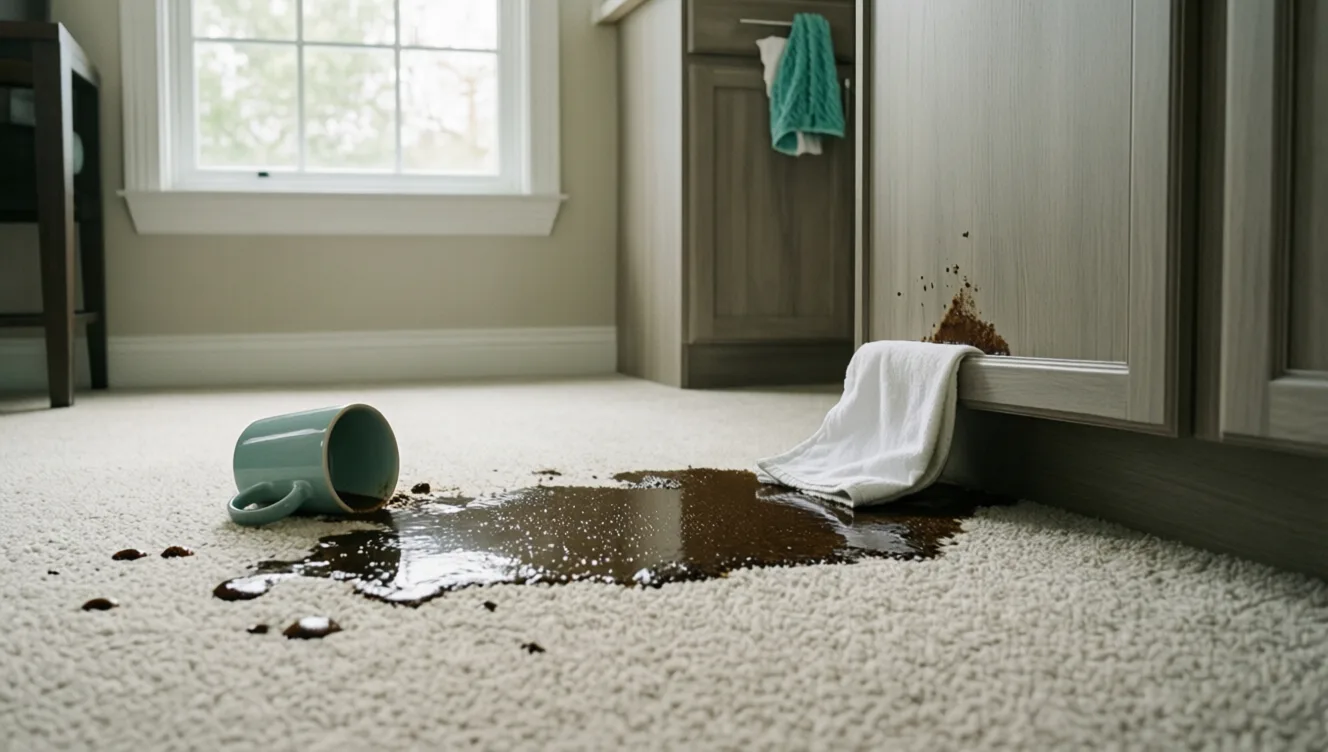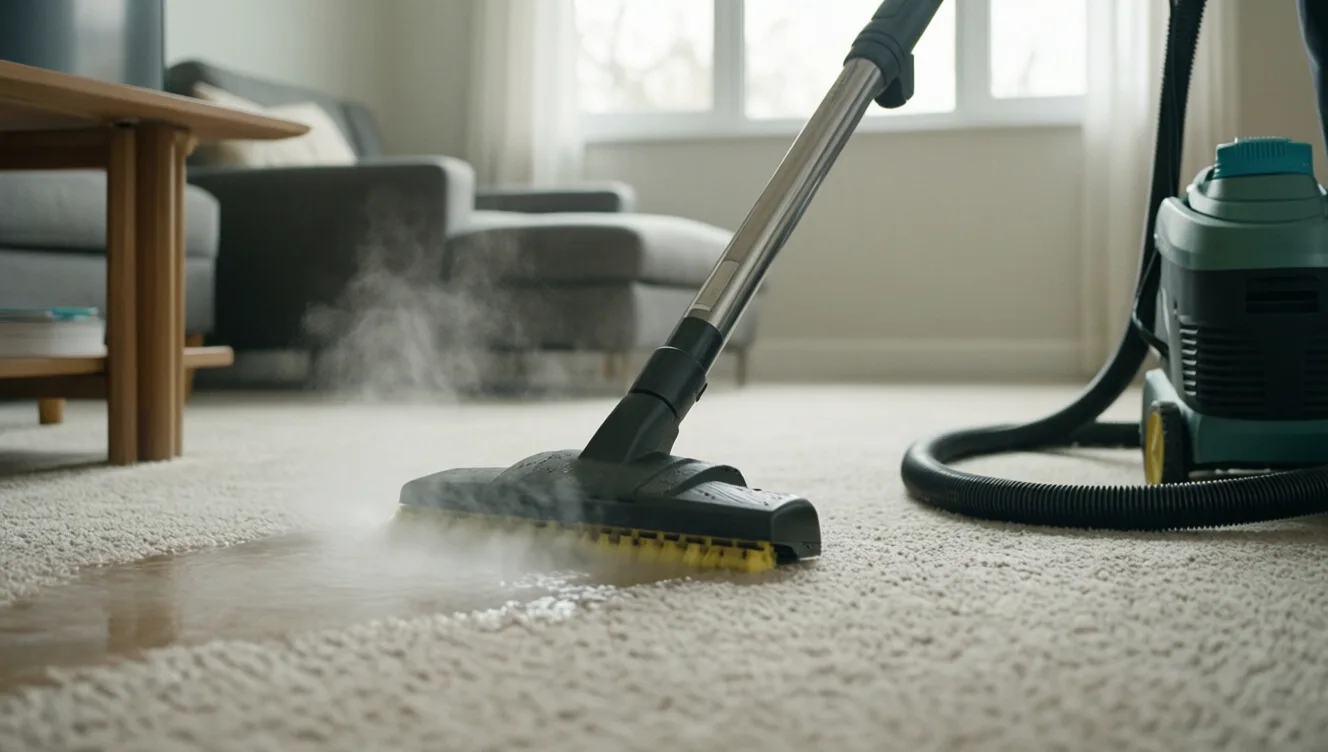
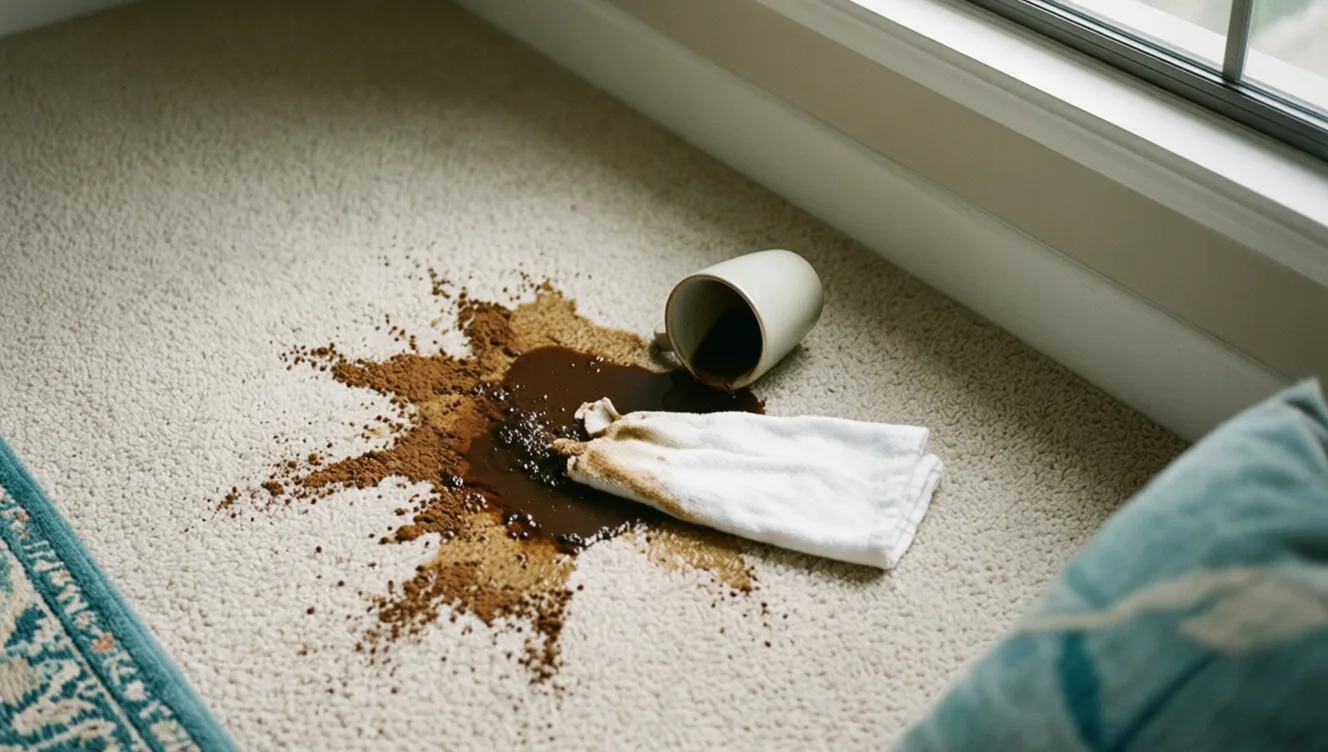
Every carpet stain is a chemistry question, and mid-spill is a bad time for research. So this is the reference page: the three universal laws, the one-line answer for every common spill, and full protocols for the stains that don't have their own guide. Bookmark it; spills don't make appointments.
The three laws (every stain, no exceptions)
- Blot, never rub. Rubbing spreads the stain outward and grinds it into the pile. Press, lift, repeat with a clean section of cloth.
- Work outside-in so the edge never grows.
- Cold before hot. Heat sets proteins, sugars, and dyes. When in doubt, cold water — hot only when a protocol says so.
And the universal stop-rule: two full rounds of any treatment is the DIY limit. A third round mostly damages pile and sets what's left.
The lookup table
- Coffee / tea → dish soap + vinegar solution, then baking soda → full guide: How to Get Coffee Stains Out of Carpet (Before They Become Permanent)
- Red wine → salt or club soda now, peroxide solution for the ghost → How to Remove Wine Stains From Carpet (Before They Become Permanent)
- Chocolate → chill it, scrape it, then the ladder → How to Remove Chocolate Stains from Carpet (Cold First, Always)
- Pet accidents → enzymatic cleaner, generously, with dwell time → How to Actually Get Pet Odors Out of Carpet (San Jose Edition)
- Pasta / tomato sauce, grease, ink, paint, nail polish → the protocols below.
Pasta and tomato sauce (the two-enemy stain)
Tomato sauce is a dye AND a grease stain traveling together — treat in that order: scrape solids first (spoon, lifting up), then blot with cold water, then work a dish-soap solution (a teaspoon in two cups of cool water) from the edge in — the soap takes the oil, the water dilutes the tomato. Rinse-blot, and if an orange shadow survives, a 50/50 peroxide-water dab (test a hidden spot first — peroxide is a mild bleach) usually clears it. Never hot water: it cooks the tomato's color into the fiber.
Grease and oil
Liquid does nothing against oil — powder does. Bury the spot in baking soda or cornstarch, let it drink the grease for a few hours (overnight for a bad one), vacuum, repeat if the powder keeps darkening. Finish with dish-soap solution — it's a degreaser by profession — and a cold rinse-blot.
Ink
Rubbing alcohol on a cloth or cotton swab, dabbed, never rubbed — ink spreads at the first sideways motion. Give it minutes to dissolve, blot the lifted ink away, repeat while progress continues. Ballpoint usually surrenders; gel and permanent marker often don't — that's a professional call, honestly quoted as an attempt, not a promise.
Paint
Wet latex paint: blot immediately, then damp-blot with cool soapy water until it stops lifting. Dried latex: soften with warm soapy water and gently scrape flakes. Oil-based paint wants the solvent its can names — sparingly, on a cloth, in a ventilated room, after a hidden-spot test. Big or dried oil-paint stains are professional work; solvents in amateur volume damage carpet backing.
Nail polish
Non-acetone remover (acetone can dissolve carpet dyes and some fibers — test first, always), dabbed on a cloth, blotting patiently as the color transfers. Let dried polish harden fully, chip off what lifts, then treat the remainder. Slow is the whole technique.
When the reference isn't enough
Some stains outrank the cabinet: anything that's been through a heat cycle (set stains), anything older than memory, mystery spots, and the delicate-fiber cases where testing is riskier than calling. Spot treatment with truck-grade extraction is routine work for us across San Jose and Santa Clara County — and it's the ending most "tough stain" stories deserve after round two → Carpet cleaning service · Carpet and rug cleaning prices
The whole system this page belongs to — schedules, methods, and the rest of the playbook → Carpet Cleaning in San Jose: The Complete Owner's Guide